top of page
.png)

Day 99 of 365
What Rest Actually Means
Being inactive is not always the same as recovering. Sometimes the thing you call rest leaves you more depleted than when you started.

15
minutes
Deep Dive Optional
DAY 99

Stop Using 'Doing Nothing' as the Only Definition of Rest
If you were running on empty, recovery may begin with doing less. Choose rest that leaves you more settled, rather than another task to complete.
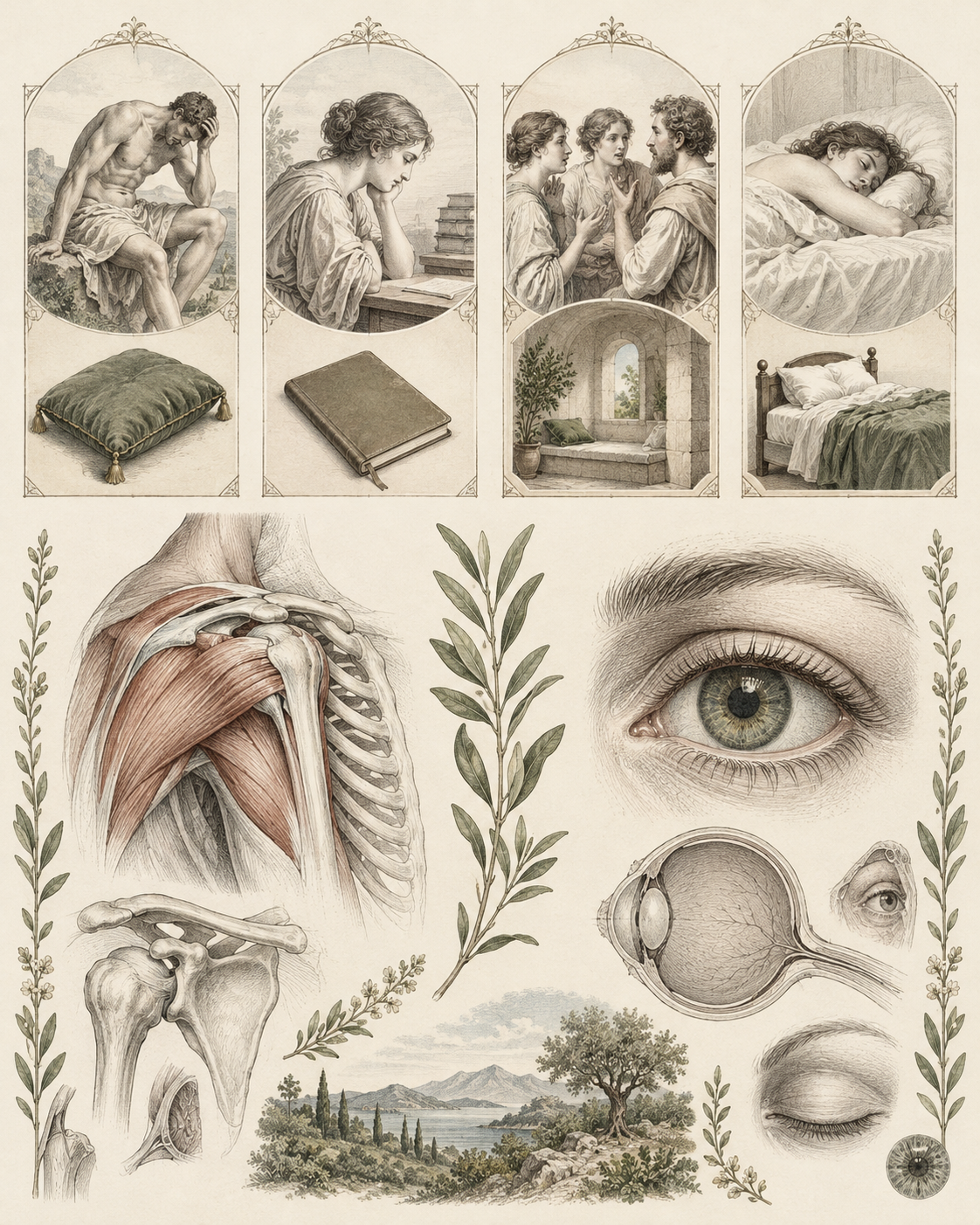
THE QUESTION IS NOT 'DID I STOP?'
The Better Question Is: What Needed a Break?
Your body may be tired while your mind wants stimulation.
Your mind may be tired while your body has barely moved.
You may be socially depleted but physically fine.
You may be overstimulated and keep adding more input because silence feels strange.
Calling all of those states 'tired' hides the solution.
Rest gets more useful when you know what is actually depleted.

Why We Chose This For You
Loading your personalized notes…
REAL REST CAN FEEL WEIRDLY UNSATISFYING AT FIRST
Scrolling gives novelty every few seconds.
Alcohol may have changed state quickly.
Television fills the room.
Quiet does not always give you that immediate hit.
So a calmer form of rest can initially feel boring.
That does not automatically mean it is ineffective.
Sometimes your brain is noticing the absence of stimulation before your body notices the relief.
RECOVERY DEPENDS ON WHAT YOU ARE RECOVERING FROM
A physically demanding day and a cognitively demanding day do not create identical needs.
Neither do social overload and sleep deprivation.
That is why a single default—usually screens, food, a drink, or collapse—may work inconsistently.
Matching the recovery tool to the actual strain makes rest more specific.
Specific tends to beat vague.
WHY THIS MATTERS
Recovery is more likely to feel useful when the activity reduces the type of demand that created the fatigue rather than simply replacing one source of stimulation with another.

A Note For You
Loading your personalized notes…

Recent Slip Insight
Add a Title
ONE BENEFIT TO WATCH FOR
The Right Kind of Rest Can Leave You More Restored Instead of Merely Distracted
You are looking for a simple difference:
Before:
drained, overloaded, restless, touched-out, mentally full.
After:
a little more space.
Not euphoria.
Not perfect calm.
Just more capacity than you had twenty minutes ago.
That is useful rest.
WHY THIS MATTERS
Recovery is more likely to feel useful when the activity reduces the type of demand that created the fatigue rather than simply replacing one source of stimulation with another.

WHAT PEOPLE DON'T TELL YOU
Rest is maintenance, not a prize for reaching exhaustion.
Many people wait until they are completely spent.
Then recovery has a much bigger job.
Rest can happen earlier.
Ten quiet minutes.
Leaving one thing unfinished.
A night without plans.
Going to bed before you are wrecked.
You do not need to prove you are tired enough.
THE BENEFIT OF DAY 99


“Rest is not the absence of effort. It is relief from the kind of effort that has been draining you.”
Cheers Without Beers

Your Version of Today's Experiment
Loading your personalized notes…

What to Take Away
Add a Title

Today's Experiment
Take the Right Kind of Break
Before your next break, identify what is actually tired. Then choose twenty minutes that reduces that specific kind of demand.


Name the Depletion
Physical, mental, social, sensory—or a mix. Pick the strongest one.


Choose Less of That
If mental, reduce decisions. If sensory, reduce input. If social, create privacy. If physical, reduce demand.

WHAT ARE YOU TESTING?
Can you tell the difference between distraction, inactivity and the kind of rest that actually restores capacity?


Judge the After
Do you feel more restored, unchanged or more depleted? That answer matters more than whether the break looked relaxing.

20 Minutes

What to Watch For
Loading your personalized notes…
WANT TO GO DEEPER?
Why Collapse Is Not a Recovery Strategy
When rest only happens after depletion, it has to repair more.
There is a common cycle:
push,
push,
push,
collapse,
recover just enough,
repeat.
It can feel productive because the pushing is visible and the collapse seems deserved.
But another model exists:
notice strain earlier,
reduce one demand,
recover some capacity,
continue.
That model can feel less dramatic.
It may also be more sustainable.
The goal is not to avoid hard work.
It is to stop treating complete depletion as proof that the day was used correctly.
Rest What Is Actually Tired
Rest is specific.
Identify whether the depletion is physical, mental, social or sensory. Then reduce that kind of demand instead of defaulting to the same form of downtime every night.


A Gentle Warning
Loading your personalized notes…
BEFORE YOU GO

What do you currently call rest that rarely leaves you feeling restored afterward?
Be honest about scrolling, television, staying up late, isolation, snacking, gaming, drinking replacements or simply collapsing.

TODAY'S TAKEAWAY
Rest the Part That Is Tired
Do not ask one form of downtime to fix every kind of depletion.

Day 100 — Look Back Before Moving Forward
Tomorrow is not another lesson. You are going to look at what one hundred days have actually changed.


bottom of page