top of page
.png)

Day 97 of 365
Exercise as Emotional Regulation
Sometimes movement is not about fitness at all. It is a way to give stress, anger, restlessness or mental noise somewhere to go.

15
minutes
Deep Dive Optional
DAY 97

Use the Body When the Feeling Lives in the Body
Check whether activity helped you feel steadier or simply busier. Use that distinction to choose what would genuinely support you after today's difficulty.
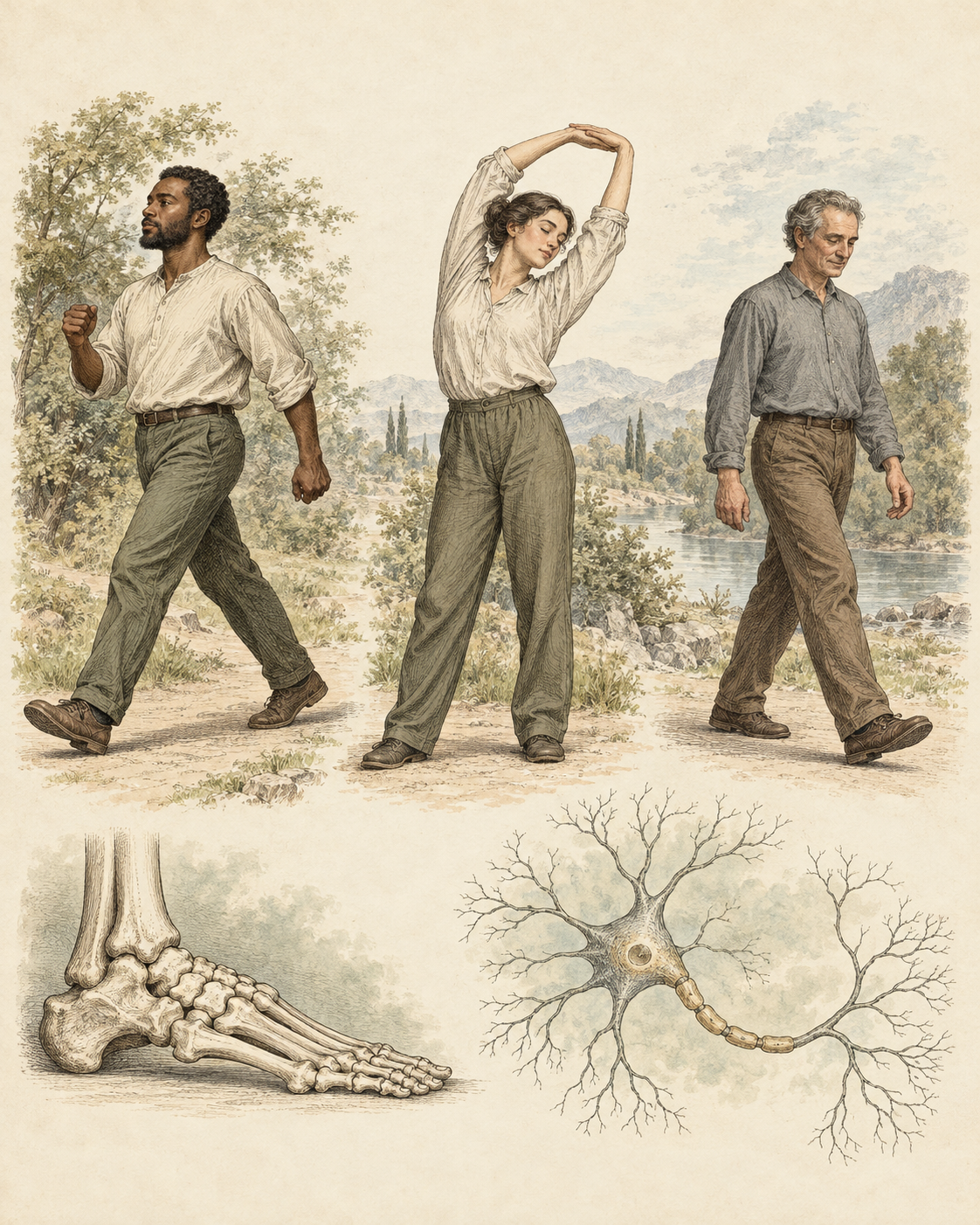
THERE IS A DIFFERENCE BETWEEN ESCAPING A FEELING AND MOVING THROUGH IT
Movement Can Create Space Without Pretending the Problem Disappeared
Imagine you come home angry.
You could:
send the text,
pick the fight,
pour the old drink,
scroll until you are numb,
or sit there trying not to feel angry.
There is another option.
Walk.
Lift.
Bike.
Run.
Do yard work.
Move hard enough to feel your body doing something.
The problem may still be there afterward.
But you may meet it from a different state.

Why We Chose This For You
Loading your personalized notes…
THE FEELING MAY STILL BE THERE — JUST LESS IN CHARGE
This is important.
A walk does not solve resentment.
A workout does not fix your relationship.
A run does not make a bad day good.
But the intensity can change.
The thought that felt urgent may feel less urgent.
The conversation you wanted to have immediately may be easier to delay.
Your body may feel less trapped inside the feeling.
That is enough to matter.
MOVEMENT CAN SHIFT AROUSAL, ATTENTION AND STRESS EXPERIENCE
Physical activity changes what the body is doing in the moment.
Breathing changes.
Muscles work.
Attention moves.
You leave the chair, room or environment where the state may have been building.
Regular physical activity is also associated with benefits for mood and stress.
None of that means exercise is treatment for every emotional problem.
It means movement can be one useful state-regulation tool among many.
WHY THIS MATTERS
Physical activity can influence arousal, attention and perceived stress, which may make it easier to respond after the emotional peak rather than during it.

A Note For You
Loading your personalized notes…

Recent Slip Insight
Add a Title
ONE BENEFIT TO WATCH FOR

Movement Can Give You a Buffer Between Feeling and Acting
That buffer may be ten minutes.
But ten minutes can change a lot.
It can be the difference between:
sending and not sending,
arguing and waiting,
spiraling and interrupting,
reacting and choosing.
The goal is not to suppress the feeling.
It is to give yourself a little more room around it.
WHY THIS MATTERS
Physical activity can influence arousal, attention and perceived stress, which may make it easier to respond after the emotional peak rather than during it.

WHAT PEOPLE DON'T TELL YOU
Not every hard conversation should be turned into a workout.
If you use movement to get regulated and then return to what matters, great.
If you use it to never speak,
never decide,
never grieve,
never apologize,
or never address the problem,
the tool may be becoming an exit.
Regulation should help you come back to life.
Not disappear from it.
THE BENEFIT OF DAY 97


“Sometimes the body needs somewhere to put the feeling before the mind can decide what to do with it.”
Cheers Without Beers

Your Version of Today's Experiment
Loading your personalized notes…

What to Take Away
Add a Title

Today's Experiment
Move Before You Respond
The next time your emotional intensity noticeably rises today, use a short bout of movement before making the next reactive decision.


Rate the State
Before moving, rate the intensity from 1–10 and name the state as simply as you can.


Choose the Movement
Pick movement that fits the feeling rather than what you think 'counts' as exercise.

WHAT ARE YOU TESTING?
Does movement reduce the intensity enough to create more choice between the feeling and your next action?


Recheck Before Acting
Rate the intensity again. Then decide whether the situation still needs action now.

10–20 Minutes

What to Watch For
Loading your personalized notes…
WANT TO GO DEEPER?
State Change Is Not the Same as Problem Solving
You can change how activated you are without pretending the underlying issue is gone.
These two things are easy to confuse.
PROBLEM SOLVING asks:
What needs to change?
STATE REGULATION asks:
What condition am I in while I decide?
Sometimes the problem truly needs action.
But if your state is at a nine out of ten, the first useful move may be reducing activation before deciding what that action is.
Movement is one way to do that.
Not the only way.
Not always the right way.
A tool.
Use Movement as a Buffer
Move before you react.
When intensity rises, try movement before the next reactive action. Then check whether the feeling changed enough to give you more choice.


A Gentle Warning
Loading your personalized notes…
BEFORE YOU GO

Which emotional state seems to improve most reliably when you move?
Think about anger, anxiety, restlessness, sadness, flatness, frustration or mental overload.

TODAY'S TAKEAWAY
Change the State Before You Decide
Movement will not solve every problem. It can help you meet the problem from a state with more room to choose.

Walking Is Underrated
Tomorrow we give one of the simplest tools in this Reset the credit it deserves.


bottom of page