top of page
.png)

Day 95 of 365
Your Energy Rhythm
You are not supposed to feel equally sharp, motivated and social every hour of the day. Learn the pattern before you judge it.

15
minutes
Deep Dive Optional
DAY 95

Stop Calling Every Dip a Problem
Your plan may have asked too much at a low-energy hour. Move the demanding part earlier or make the evening version simpler.
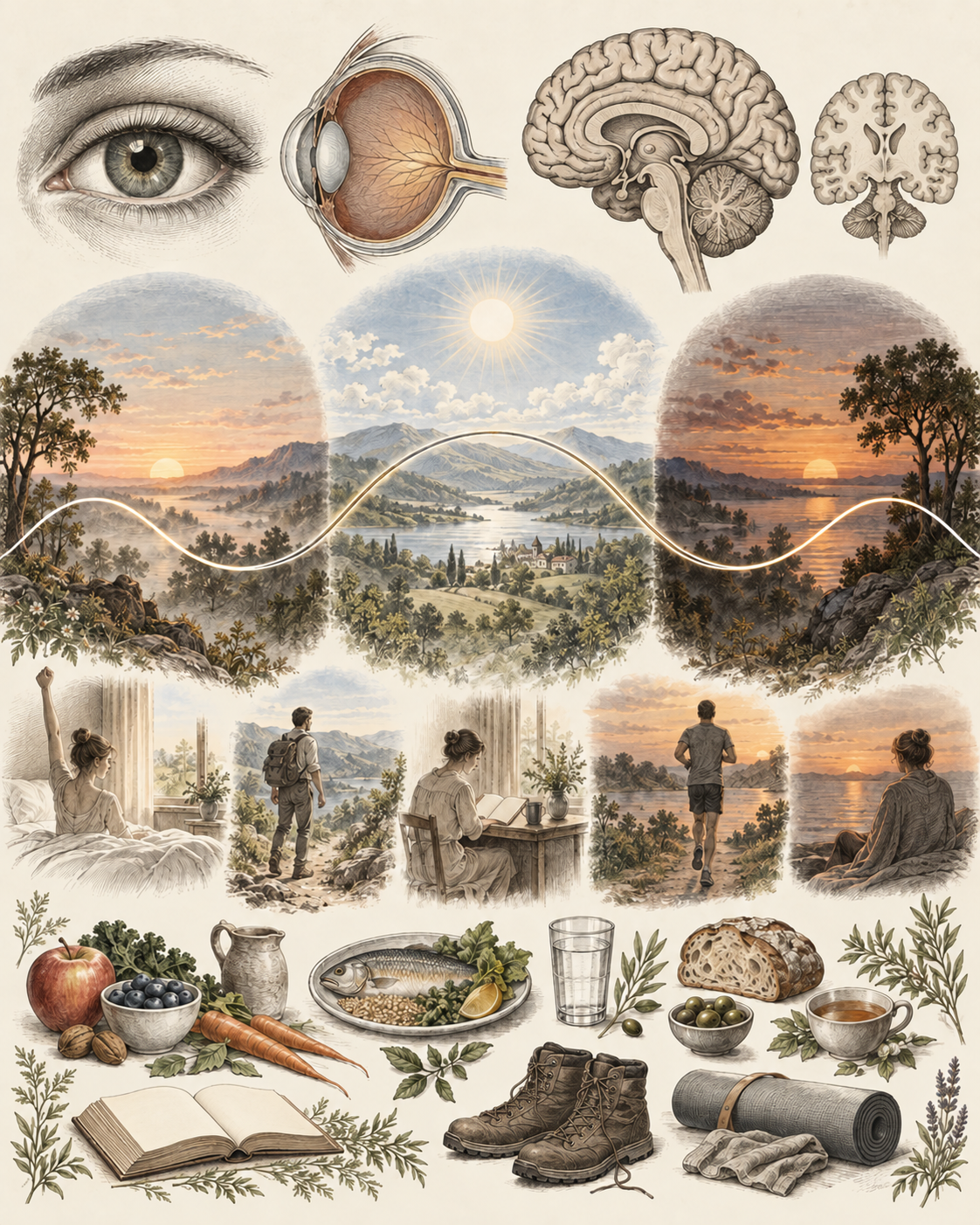
THE 3:00 P.M. VERSION OF YOU MAY NOT NEED FIXING
A Dip Can Be a Rhythm, Not a Character Flaw
Maybe you know the hour.
2:17.
3:30.
The drive home.
Right after dinner.
Your brain slows.
You reach for caffeine.
You scroll.
You get irritable.
You decide you are lazy.
But the pattern repeats so reliably that it deserves curiosity before criticism.
What if you stopped expecting your lowest-energy window to behave like your best one?
That changes the question from:
How do I force myself through this?
to:
What belongs here?

Why We Chose This For You
Loading your personalized notes…
YOU MAY REALIZE SOME OF YOUR 'BAD HABITS' HAPPEN AT THE SAME ENERGY LOW POINT
That can be useful.
The snack.
The doomscroll.
The argument.
The caffeine.
The old drink.
The decision to skip the workout.
They may not be random.
If several show up during the same depleted window, the real pattern may be broader than any single behavior.
The system is asking for something.
Energy.
Food.
A break.
Movement.
Less demand.
A transition.
Now you can test which.
ALERTNESS CHANGES ACROSS THE DAY FOR REAL BIOLOGICAL REASONS
Circadian rhythms influence alertness across the day, and time awake creates increasing sleep pressure.
Food, sleep quality, activity, stress and individual chronotype add more variation.
That is why energy does not move in a perfectly straight line from morning to night.
Some people feel sharp early.
Some later.
Most have recognizable windows.
You do not need a wearable to learn yours.
Repeated honest observation is enough to start.
WHY THIS MATTERS
Recognizing predictable energy patterns allows you to match tasks and supports to the state you are actually in, reducing unnecessary friction and reactive decision-making.

A Note For You
Loading your personalized notes…

Recent Slip Insight
Add a Title
ONE BENEFIT TO WATCH FOR
Knowing Your Low-Energy Window Lets You Protect It Before It Turns Into a Bad Decision Window
When you know the dip is coming, you can prepare.
Eat before it.
Take the walk then.
Schedule the easier task.
Lower stimulation.
Delay the difficult conversation.
Stop adding caffeine automatically.
Build the transition there.
That is different from waiting until you feel terrible and asking yourself why you have no discipline.
WHY THIS MATTERS
Recognizing predictable energy patterns allows you to match tasks and supports to the state you are actually in, reducing unnecessary friction and reactive decision-making.

WHAT PEOPLE DON'T TELL YOU
Sometimes you are tired. Sometimes you are bored. Sometimes you need food. Those are different problems.
Caffeine can help alertness.
So can movement.
So can food if you are under-fueled.
So can a short break.
So can changing tasks.
The mistake is using the same answer every time.
Before adding stimulation, ask what kind of low this actually is.
THE BENEFIT OF DAY 95


“You do not have one energy level. You have a rhythm.”
Cheers Without Beers

Your Version of Today's Experiment
Loading your personalized notes…

What to Take Away
Add a Title

Today's Experiment
Draw Your Energy Curve
Check in three times today and rate your energy, focus and irritability. Tonight, draw the rough shape instead of obsessing over the numbers.


Check the Morning
Rate energy, focus and patience from 1–10. Note what time you woke and whether the morning feels natural or forced.


Check the Afternoon
Do the same in the window where you usually fade. Add one note: hungry, bored, stressed, overstimulated, sleepy or fine.

WHAT ARE YOU TESTING?
Can you identify a repeatable energy pattern that helps explain when certain behaviors become easier or harder?


Check the Evening
Notice whether energy returns, keeps falling or changes form. Do you become physically tired but mentally wired? Calm? Restless?

2 Minutes, Three Times Today

What to Watch For
Loading your personalized notes…
WANT TO GO DEEPER?
Chronotype Without Turning Yourself Into a Label
People differ in preferred timing, but you still live in a real schedule.
Some people naturally lean earlier.
Some later.
Many sit somewhere in between.
That tendency is often described as chronotype.
It can be useful language if it helps you notice:
when focus comes easiest,
when sleepiness appears,
and which schedules create friction.
It becomes less useful when it turns into:
“I am a night owl, so nothing can change,”
or
“I should be a morning person.”
Use the concept as information, not identity.
Your actual life still matters:
work,
kids,
school,
training,
relationships,
and the schedule you have to live inside.
Learn Your Curve
Stop expecting flat energy.
Identify your higher-, middle- and lower-energy windows. Then stop scheduling every demand as if your body feels identical all day.


A Gentle Warning
Loading your personalized notes…
BEFORE YOU GO

What time of day are you most likely to make choices you regret, and how much of that may be connected to your energy state?
Think beyond alcohol: food, scrolling, caffeine, arguments, skipped exercise, procrastination, impulse spending or simply checking out.

TODAY'S TAKEAWAY
Design Around the Rhythm You Actually Have
You do not need the same energy all day. Learn where your energy rises and falls, then use that information instead of fighting it.

Movement Beyond Willpower
Tomorrow we look at movement as something more useful than a fitness obligation—and build it into the day in a way that does not depend on feeling motivated.


bottom of page