top of page
.png)

Day 78 of 365
Your Emergency Toolkit
Not every craving deserves emergency mode. But when one does, you should not be searching for ideas.

15
minutes
Deep Dive Optional
RESET SUPPORT

Build This While You Are Calm
Make the useful option easy to reach now, not after another difficult hour. Your backup plan is there to be used.
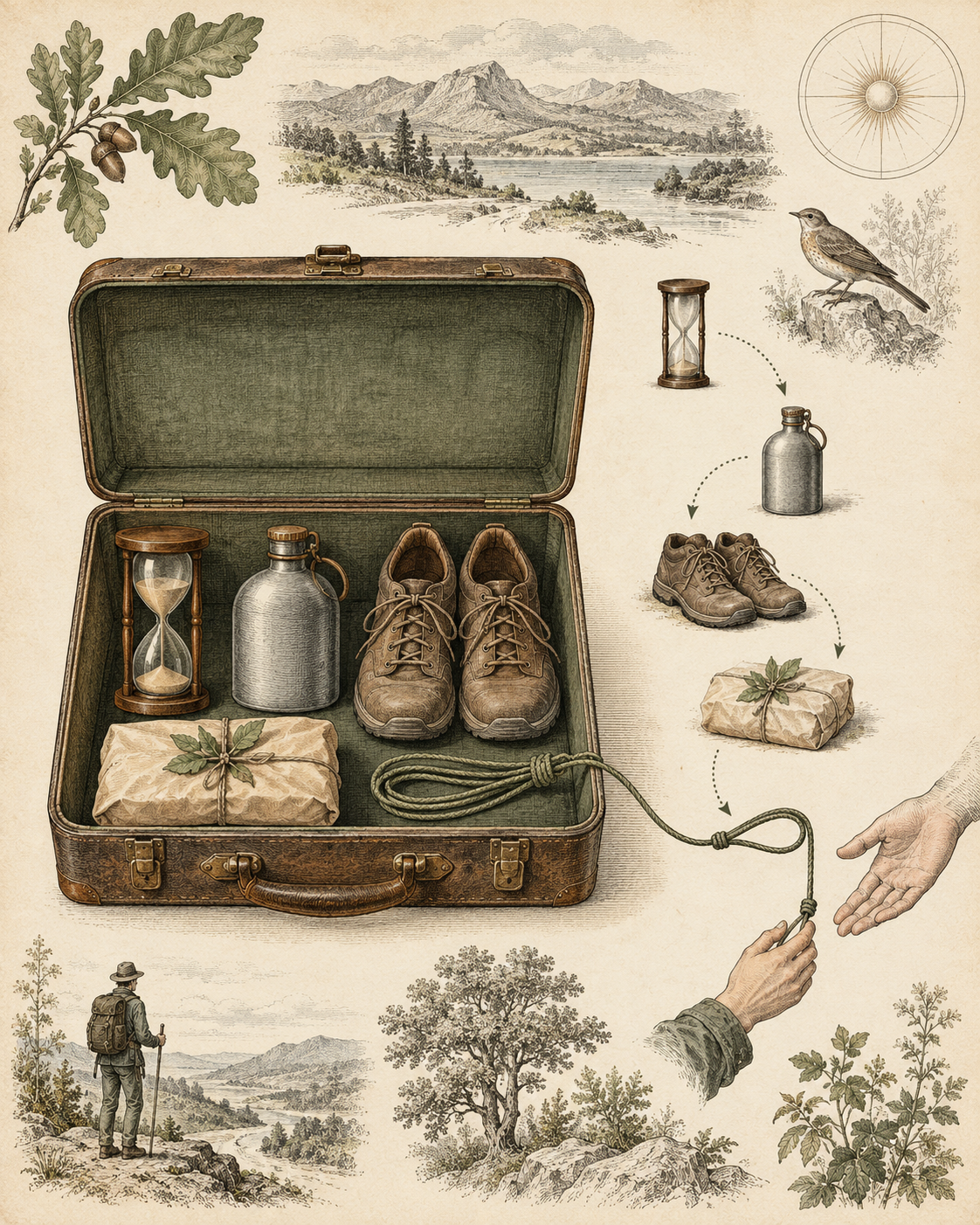
A TOOLKIT IS USELESS IF YOU CANNOT FIND THE TOOL WHEN YOU NEED IT
The Hard Moment Should Not Require Creativity
It is 8:17 PM.
The urge is strong.
You are angry, tired and very aware that alcohol is ten minutes away.
This is not when you want to remember Day 38, scroll through notes or rank eighteen interventions.
You need the emergency card.
First move.
Second move.
Person.
Exit.
Rule.
That is it.
Emergency planning is different from everyday planning because the cognitive load needs to collapse.
A good emergency toolkit is almost offensively simple.
That simplicity is the point.

Why We Chose This For You
Loading your personalized notes…
EMERGENCY MODE MAY FEEL DRAMATIC BEFORE IT FEELS USEFUL
You may think:
“This is overkill. I’m just having a craving.”
Maybe.
But emergency mode does not mean panic.
It means:
stop improvising.
The toolkit exists for the smaller number of moments when ordinary flexibility starts shrinking.
You do not need to use it every time.
You need to know exactly when it becomes appropriate.
STRONG URGES REDUCE THE VALUE OF COMPLEX CHOICE
As activation rises, attention can narrow and immediate reward can become more salient.
That makes complex decision trees less useful.
A short precommitted sequence reduces cognitive demand.
Instead of deciding among ten strategies, you execute the first one.
Then reassess.
This is the behavioral equivalent of an emergency checklist.
WHY THIS MATTERS
Preselected responses reduce cognitive load and help initiate protective action before high-risk bargaining becomes the main event.

A Note For You
Loading your personalized notes…

Recent Slip Insight
Add a Title
ONE BENEFIT TO WATCH FOR
Faster Response Under Pressure
You Spend Less Time Bargaining and More Time Changing the Situation
A ready toolkit shortens the gap between:
“This is getting bad”
and
“I know what I do next.”
That can reduce the amount of time the urge gets to grow inside indecision.
WHY THIS MATTERS
Preselected responses reduce cognitive load and help initiate protective action before high-risk bargaining becomes the main event.

WHAT PEOPLE DON'T TELL YOU
This is not the place for your most sophisticated intervention.
The best emergency tool may be:
eat a sandwich,
leave the house,
call Mike,
go to bed.
That can feel underwhelming.
Good.
You are not trying to win an award for emotional insight.
You are trying to get through a narrow period without making a decision you do not want.
The emergency toolkit is allowed to be basic.
ONE BENEFIT TO WATCH FOR


“In the hardest moment, simple beats impressive.”
Cheers Without Beers

Your Version of Today's Experiment
Loading your personalized notes…

What to Take Away
Add a Title

Today's Experiment
Build the Emergency Card
Write a five-line emergency plan and store it somewhere you can access without thinking.


Choose the Trigger Threshold
When does emergency mode start for you? Urge above 7? Driving toward the store? Alcohol already in the house? A certain kind of thought?


Write the Five Lines
First move. Person. Exit. Decision rule. Next-morning protection.

WHAT ARE YOU TESTING?
Can you execute the first action of the plan without needing to reason your way into it?
A good emergency toolkit feels almost automatic.


Make It Frictionless
Pin the note. Save the number. Put shoes by the door. Stock the food. Set up whatever makes the first move immediate.

10 Minutes

What to Watch For
Loading your personalized notes…
WANT TO GO DEEPER?
Why Emergency Planning Should Stay Separate From Everyday Coping
If everything is an emergency, nothing is.
You do not want to respond to every mild thought about alcohol as if disaster is imminent.
That can increase hypervigilance and keep alcohol mentally central.
Emergency planning should be reserved for clear threshold moments:
strong urge,
rapid escalation,
high-risk environment,
slip trajectory,
severe bargaining.
Most days should use lighter tools.
That distinction protects both sides.
Everyday life stays normal.
Emergency mode stays powerful because it is specific.
Pre-Decide Emergency Mode
Do not invent the response during the crisis.
Choose the threshold, first move, support person, exit and decision rule before the high-risk moment arrives.


A Gentle Warning
Loading your personalized notes…
BEFORE YOU GO

What is the earliest sign that an ordinary urge is becoming a high-risk moment for you?
Think about intensity, thoughts, location, behavior, availability and whether you start moving toward alcohol.

ONE THING TO TAKE WITH YOU
Emergency Mode Should Start Before the Decision Feels Gone
Use a simple preplanned sequence while there is still room to change the situation.

Your Environment Plan
Tomorrow we turn your environment work into a permanent plan: what stays easy, what stays out of the way and what no longer needs protection.


bottom of page