.png)

Day 64 of 365
Escape
Not every drink was about pleasure. Sometimes the appeal was that, for a while, you could be somewhere else without going anywhere.

15
minutes
Deep Dive Optional
RESET SUPPORT

What Exactly Were You Trying to Get Away From?
Wanting a break doesn't make the day a lost cause. Find a manageable way to step away from the pressure that's still there.
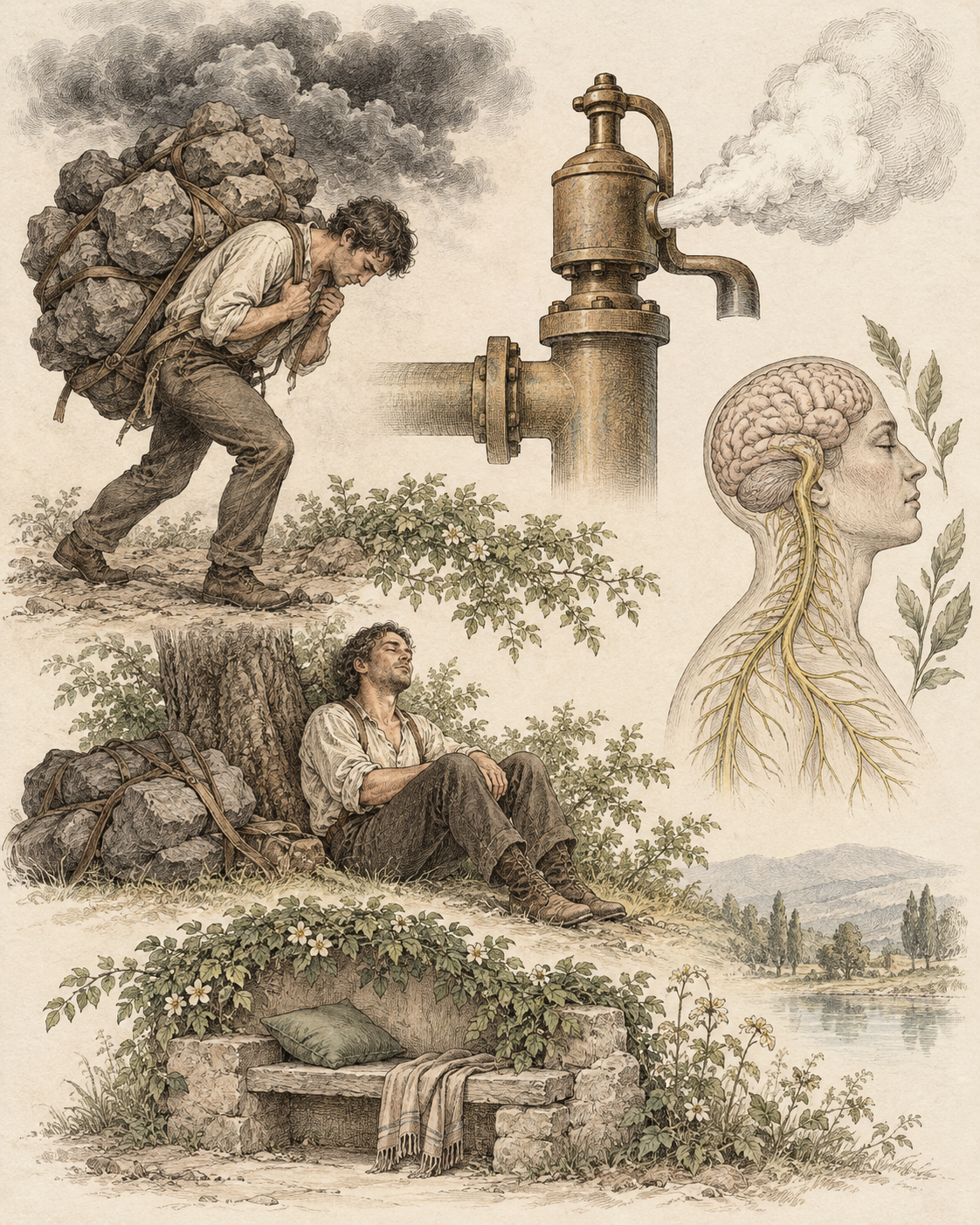
SOMETIMES THE DRINK WAS A DOOR YOU COULD CLOSE WITHOUT LEAVING THE ROOM
You Did Not Always Want a Drink. You Wanted to Be Unavailable.
The day is technically over.
But your mind is still taking calls.
Work conversation replaying.
Tomorrow’s list.
Something your partner said.
Money.
Kids.
What you forgot.
What you should be doing.
Then the drink arrives.
For a while, your attention narrows.
The edges soften.
The urgency drops.
You stop trying to solve everything at once.
That relief can be real.
And if we reduce the entire pattern to “bad coping,” we miss why it was attractive.
Maybe what you needed was not intoxication.
Maybe you needed a boundary strong enough that nothing else was allowed in.
Alcohol became the boundary.
The deeper work is learning what kind of escape you were asking for.

Why We Chose This For You
Loading your personalized notes…
YOU MAY DISCOVER THAT YOU DO NOT WANT TO 'COPE' — YOU WANT OFF DUTY
That distinction can be relieving.
Sometimes you do not need a strategy for handling stress better.
You need twenty minutes where you are not handling anything.
No questions.
No optimization.
No family logistics.
No emails.
No self-improvement.
If alcohol reliably created that boundary, removing it can leave you feeling strangely exposed to nonstop responsibility.
The answer may be less about tolerance and more about permission.
A real off-duty period can be behavioral medicine for a life that never stops asking.
NEGATIVE REINFORCEMENT MAKES ESCAPE LEARN FAST
When a behavior reduces an unpleasant state, the brain has a reason to repeat it.
That is negative reinforcement.
The behavior does not need to solve the underlying problem.
It only needs to make the state feel less intense temporarily.
That is why escape habits can become strong.
Stress appears.
Alcohol reduces awareness or emotional intensity.
The brain learns:
this is an effective exit.
To compete, a new response needs to provide some real reduction in demand—not just intellectual insight about why escape is unhealthy.
WHY THIS MATTERS
When the underlying need is reduced demand or psychological distance, intentionally providing that distance can reduce reliance on alcohol as the only reliable exit.

A Note For You
Loading your personalized notes…

Recent Slip Insight
Add a Title
ONE BENEFIT TO WATCH FOR
Real Off-Duty Time
You Can Learn to Step Away Without Disappearing From Yourself
A better escape gives you actual distance while leaving more of you available afterward.
Quiet.
A walk.
A shower.
A game.
Music.
A drive.
Reading.
A locked door for twenty minutes.
Whatever genuinely lowers demand.
The point is not to eliminate the desire to escape.
It is to make the escape restorative instead of costly.
WHY THIS MATTERS
When the underlying need is reduced demand or psychological distance, intentionally providing that distance can reduce reliance on alcohol as the only reliable exit.

WHAT PEOPLE DON'T TELL YOU
Even a good life can be relentless.
You can love your job and want the workday to stop.
Love your kids and need nobody to talk to you for ten minutes.
Love your partner and need space.
Be grateful and overwhelmed.
Those things can coexist.
People sometimes shame themselves because the desire to escape sounds like rejection of the life they built.
It is often simpler.
You are tired of being on.
That need deserves a better answer than guilt.
ONE BENEFIT TO WATCH FOR


“Sometimes you do not need a better attitude. You need to be off duty for a minute.”
Cheers Without Beers

Your Version of Today's Experiment
Loading your personalized notes…

What to Take Away
Add a Title

Today's Experiment
Create a Real Off-Duty Window
Choose one period today where you intentionally become unavailable to the kind of demand you most often used alcohol to escape.


Name the Target
What are you escaping most often: thought, responsibility, noise, conflict, emotion, boredom or self-criticism?


Build Actual Distance
Choose a response that reduces that specific demand. Silence the phone, leave the room, walk, read, drive, shower, rest, use headphones—make the distance real.

WHAT ARE YOU TESTING?
Can you create psychological distance without creating a second problem for later?
The goal is not zero thoughts. It is enough distance that the original state stops owning the whole evening.


Check Whether You Returned Better
Afterward, ask whether you feel more resourced, equally flooded or simply distracted. A restorative escape should make re-entry easier.

20–30 Minutes

What to Watch For
Loading your personalized notes…
WANT TO GO DEEPER?
Escape and Avoidance Are Related — But Not Identical
Tomorrow we separate them.
Escape is about changing how close an experience feels.
Avoidance is often about not engaging with something that needs engagement.
They can overlap.
You may drink to escape the anxiety created by an unpaid bill.
If you feel better for the evening but pay the bill tomorrow, that was temporary escape.
If drinking repeatedly helps you postpone opening the bill, now avoidance is maintaining the problem.
That distinction matters.
Healthy temporary escape can be restorative.
Avoidance tends to increase the burden waiting on the other side.
Tomorrow we look at that line.
Name What You Need Distance From
Escape has a target.
Identify what alcohol helped you step away from, then build a form of temporary distance that leaves you more able to return.


A Gentle Warning
Loading your personalized notes…
BEFORE YOU GO

When you wanted alcohol as an escape, what did you most want to stop feeling responsible for?
Think beyond emotion: work, people, decisions, noise, self-criticism, thought, boredom or always being the one who handles things.

ONE THING TO TAKE WITH YOU
The Desire to Escape Is Information
Do not shame the need for distance. Build a form of distance that actually restores you.

Avoidance
Tomorrow we ask the harder question: what becomes easier to postpone once alcohol changes the state?