.png)

Day 57 of 365
Relationships When You Change
You can change one behavior and quietly rearrange a relationship that had learned how the old version of you worked.

15
minutes
Deep Dive Optional
RESET SUPPORT

Your Change Does Not Happen in a Vacuum
Change can make relationships feel temporarily awkward. Address the specific interaction without deciding that you or the relationship must be entirely different now.

YOU CAN FEEL BETTER AND STILL CREATE FRICTION AROUND YOU
Your Improvement May Be Good News That Still Requires Adjustment
You are six or seven weeks into this.
You sleep better.
You are clearer at night.
Maybe you are up earlier.
Maybe you are less interested in sitting around drinking for three hours.
From your perspective, this is progress.
Then your partner says:
“You’ve changed.”
Depending on the tone, those words can land like criticism.
But of course you changed.
That was the point.
The harder question is what your change means inside the relationship.
Maybe Friday nights used to be shared drinking time.
Maybe one of you now goes to bed before the other.
Maybe your partner wonders whether you are judging their drinking.
Maybe you are noticing patterns you did not notice before.
Maybe they miss the ritual even if they support your decision.
Change can be healthy and inconvenient at the same time.
That does not mean the relationship is in trouble.
It means the system has to update too.

Why We Chose This For You
Loading your personalized notes…
YOU MAY NOTICE THINGS YOU USED TO DRINK PAST
This can be one of the more uncomfortable parts.
Maybe an argument you used to forget is now still there at 10 PM.
Maybe boredom in the relationship becomes more visible.
Maybe you realize you genuinely like talking more when you are clear.
Maybe intimacy feels different.
Maybe your partner’s drinking bothers you more now—not because it changed, but because your vantage point did.
Do not rush to turn every observation into a verdict about the relationship.
You are collecting information from a new state.
Some of it will settle.
Some of it may matter.
Give yourself enough time to learn the difference.
RELATIONSHIPS CREATE SHARED HABITS
Habits can be interpersonal.
One person opens the wine.
The other gets the glasses.
Friday means takeout.
Vacation means cocktails.
Arguments end when someone pours a drink.
Sex happens after both people have been drinking.
Those are shared behavioral sequences.
When one person changes one step, both people can feel the disruption.
That does not mean both people need to make the same change.
It means a replacement sometimes needs to exist at the relationship level—not only the individual level.
WHY THIS MATTERS
Separating connection from the alcohol ritual helps preserve valued relationship functions while allowing individual behavior to change.

A Note For You
Loading your personalized notes…

Recent Slip Insight
Add a Title
ONE BENEFIT TO WATCH FOR
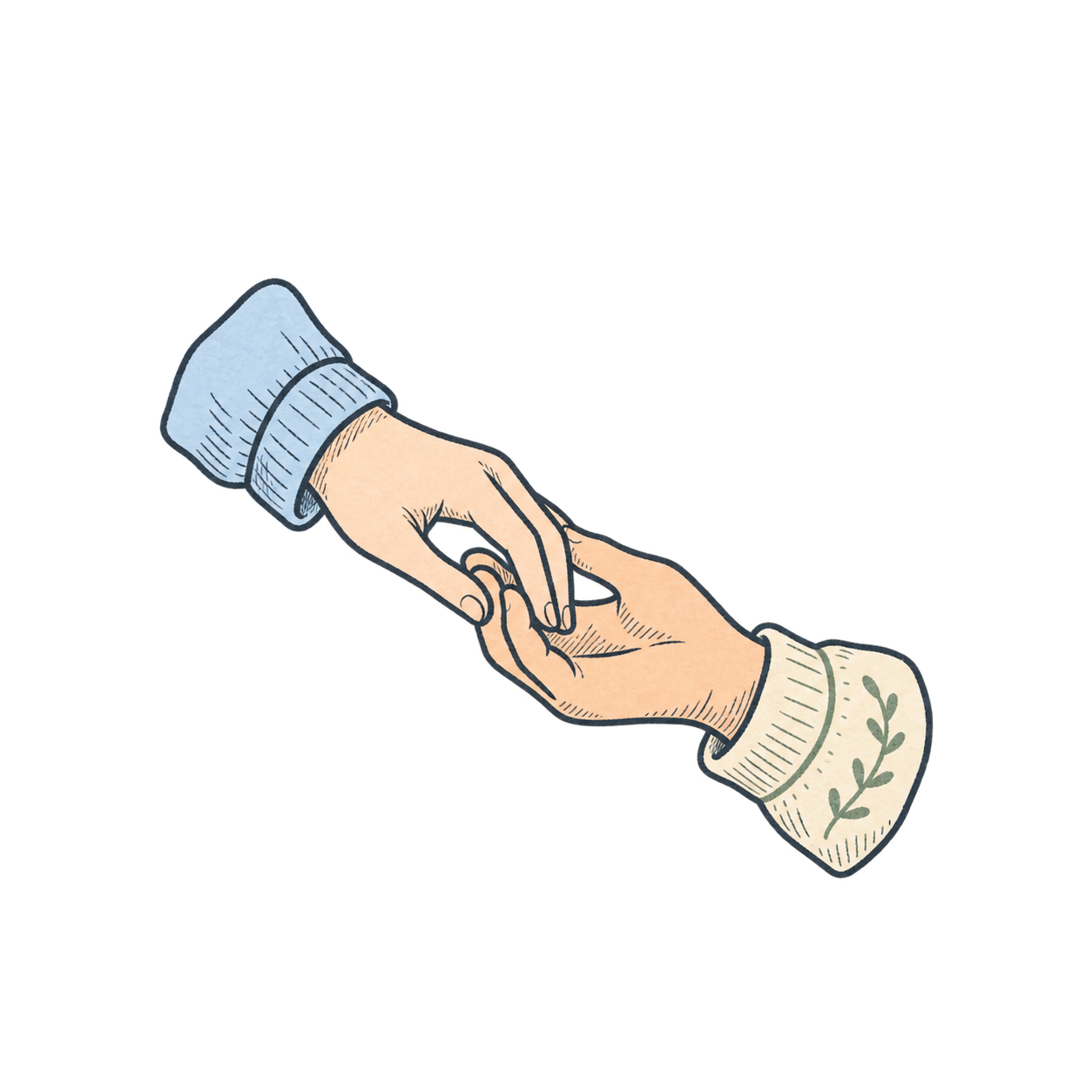
More Intentional Connection
You Can Start Choosing the Relationship Ritual Instead of Automatically Choosing the Drinking Ritual
When alcohol is no longer doing the organizing, you get to ask better questions.
What do we actually like doing together?
When do we feel connected?
What makes date night feel like date night?
What helps us transition out of work mode?
What do we miss?
The answers can make the relationship more intentional even if the other person continues drinking.
WHY THIS MATTERS
Separating connection from the alcohol ritual helps preserve valued relationship functions while allowing individual behavior to change.

WHAT PEOPLE DON'T TELL YOU
Support does not always look like matching your behavior.
It can be tempting to make another person’s choices part of your measurement.
“They still drink, so this is harder.”
“They should want to do this too.”
“If they supported me, they wouldn’t drink around me.”
Sometimes a boundary is genuinely needed.
But sometimes support looks different.
They do not pressure you.
They make sure there are options for you.
They respect your exit.
They ask how you are doing.
They keep their alcohol out of your face if that matters.
They listen.
Your Reset belongs to you.
Their behavior belongs to them—unless it crosses a boundary you need to address together.
ONE BENEFIT TO WATCH FOR


“When one person changes, the relationship does not have to choose sides. It has to learn a new rhythm.”
Cheers Without Beers

Your Version of Today's Experiment
Loading your personalized notes…

What to Take Away
Add a Title

Today's Experiment
Replace One Shared Drinking Ritual
Choose one repeated relationship moment where alcohol used to organize the connection and rebuild that moment around what you actually valued.


Name the Old Ritual
Be specific: wine while cooking, drinks after kids go to bed, Friday happy hour, date-night cocktails, Sunday game drinks.


Name What You Miss
Is it the drink—or the uninterrupted time, playfulness, reward, conversation, intimacy or signal that responsibilities were done?

WHAT ARE YOU TESTING?
Can the relationship keep something it valued even while one person’s behavior changes?
The goal is not for the replacement to feel identical. It is for the connection to remain visible.


Keep the Function
Create one version that preserves the part you care about without requiring your old drinking behavior.

One Conversation + One Trial

What to Watch For
Loading your personalized notes…
WANT TO GO DEEPER?
When Personal Change Becomes Interpersonal Data
A Reset can reveal relationship patterns without automatically diagnosing the relationship.
Changing alcohol use can alter the conditions under which you experience another person.
More sober time.
More memory.
Different sleep.
Different conflict patterns.
Different social choices.
That can create real new observations.
But interpretation deserves care.
If you notice more tension, is the relationship worse—or are you no longer numbing the tension?
If you feel less connected, did alcohol create connection—or did it create a shared activity?
If intimacy changes, is something wrong—or are you learning what vulnerability feels like without reduced inhibition?
These are questions.
Not conclusions.
One of the strengths of a longer Reset is that you do not need to rush the answer after one weekend.
Keep the Connection, Update the Ritual
Your behavior changed inside a shared system.
Name what alcohol organized in the relationship, identify what actually mattered and rebuild that function together where possible.


A Gentle Warning
Loading your personalized notes…
BEFORE YOU GO

What relationship ritual has changed the most since you stopped drinking—and what part of that ritual do you actually want to keep?
Think about evenings, weekends, date nights, sex, vacations, arguments, cooking, sports and how you used to transition together.

ONE THING TO TAKE WITH YOU
Your Change Is Yours. The Relationship Still Gets to Adapt.
Preserve connection where you can, communicate boundaries where you need them, and do not demand that another person make the same choice to validate yours.

Sex, Intimacy & Vulnerability
Tomorrow we go into a part of alcohol change that gets talked about much less: what happens when intimacy no longer comes with automatic lowered inhibition.