.png)

Day 43 of 365
Loneliness vs. Solitude
Being alone is a circumstance. Loneliness is an experience. Alcohol can get tangled up with both.

15
minutes
Deep Dive Optional
RESET SUPPORT

Do You Need People — Or Do You Need Your Alone Time to Feel Different?
Being alone and feeling lonely aren't always the same thing. Work out which was present tonight before choosing company, quiet, or another kind of support.
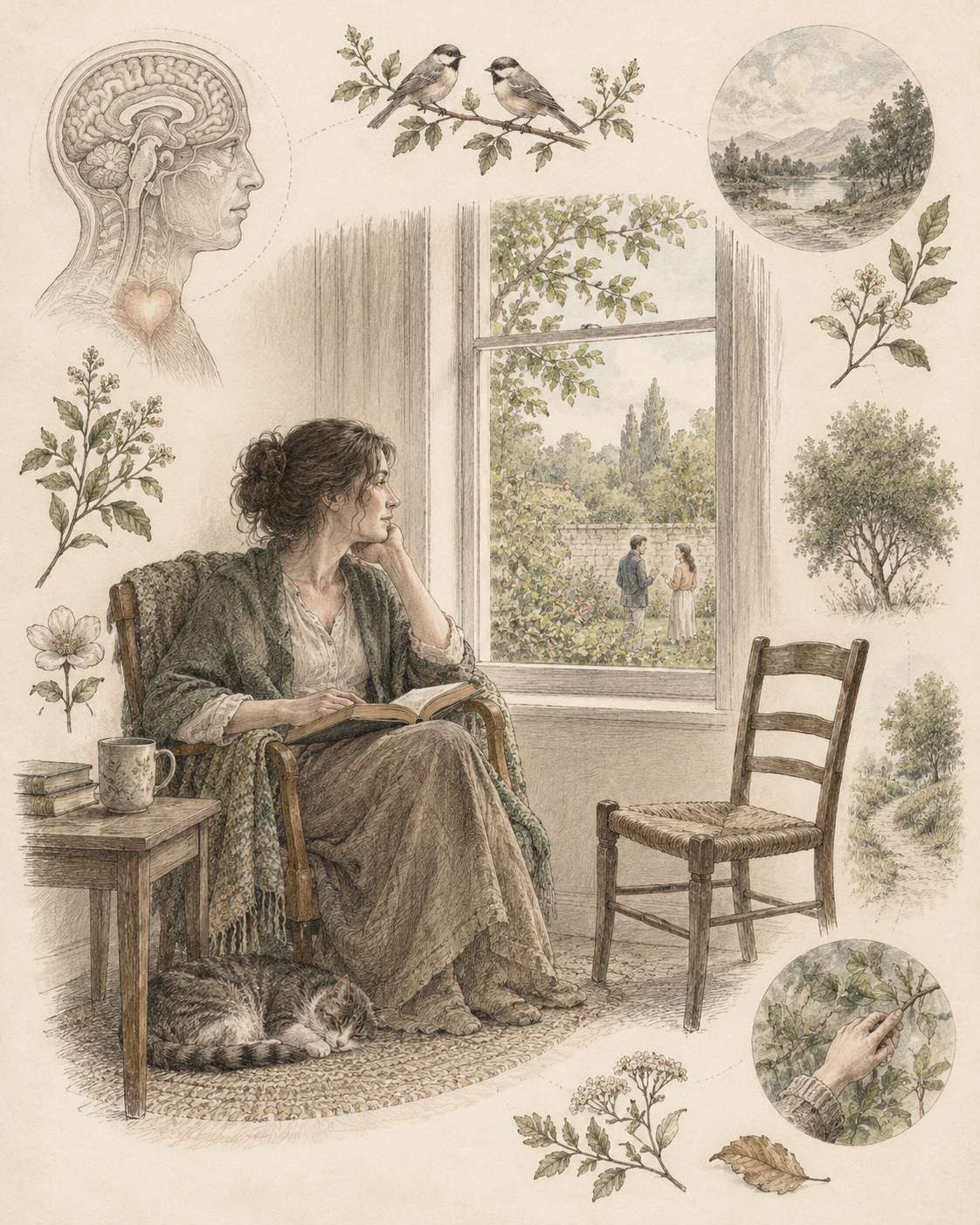
YOU CAN BE LONELY IN A ROOM FULL OF PEOPLE — AND PERFECTLY FINE BY YOURSELF
The Number of People Around You Does Not Tell the Whole Story
It is Friday night.
One person is home alone and miserable.
They scroll through photos of people out doing things. The house feels too quiet. There is nobody to tell about the weird thing that happened at work. Drinking used to blur the sharp edge of that disconnection.
Another person is also home alone.
They have been around people all week and have wanted this exact moment since Tuesday.
No questions.
No small talk.
Nobody needing anything.
They pour a drink because that is what they have always done with their private time.
Those two people may report the same trigger: “drinking alone.”
But the function is completely different.
One needs connection.
The other may need to learn how to enjoy solitude without alcohol being the ticket of admission.

Why We Chose This For You
Loading your personalized notes…
YOU MAY MISS THE DRINK EVEN WHEN YOU DO NOT MISS PEOPLE
This can be confusing.
You may genuinely enjoy being alone and still find evenings alone harder without alcohol.
That does not automatically mean you are lonely.
Maybe alcohol gave the night a shape.
Maybe it made a show feel more like an event.
Maybe it signaled that nobody could ask anything else of you.
Maybe the first pour created anticipation.
If that is the pattern, forcing yourself to socialize every time you want a drink would miss the point.
You might not need company.
You might need to rebuild private time so it feels rewarding on its own.
SOCIAL NEED AND REWARD EXPECTATION CAN LOOK SIMILAR FROM THE OUTSIDE
Humans are social, but the need for connection varies by person and by moment.
Loneliness is not simply the absence of people. It reflects a gap between the connection you want and the connection you feel you have.
Alcohol can become associated with that gap because it may reduce discomfort, create a sense of ritualized company, or make passive activities feel more rewarding.
But alcohol can also become attached to healthy solitude through repetition.
That is why “drinks alone” is not enough information.
We need the internal context.
WHY THIS MATTERS
Precise labeling keeps you from prescribing social contact when you need quiet—or hiding inside quiet when what you actually need is another person.

A Note For You
Loading your personalized notes…

Recent Slip Insight
Add a Title
ONE BENEFIT TO WATCH FOR
Better Connection Decisions
You Stop Treating Every Alone Night Like the Same Problem
Once you know whether the need is connection or solitude, the evening gets easier to design.
Loneliness can prompt a real reach-out instead of more isolation.
Healthy solitude can remain protected without forcing yourself into social plans you do not want.
And if the real issue is ritual or boredom, you can work on that directly instead of calling it loneliness.
WHY THIS MATTERS
Precise labeling keeps you from prescribing social contact when you need quiet—or hiding inside quiet when what you actually need is another person.

WHAT PEOPLE DON'T TELL YOU
You can be lonely and still have absolutely no desire for a party.
When people hear “loneliness,” the obvious solution is often: be more social.
That can sound exhausting.
Connection can be much smaller.
One honest text.
A ten-minute call.
Sitting with your partner instead of both disappearing into separate screens.
Walking with someone.
Telling one person what kind of day you actually had.
The goal is not maximum social activity.
It is enough meaningful contact to close the gap you are feeling.
And if there is no gap? Enjoy being alone.
Solitude does not need to be treated like a condition to cure.
ONE BENEFIT TO WATCH FOR

“Do not cure solitude. Do not romanticize loneliness. Learn which one you are in.”
Cheers Without Beers

Your Version of Today's Experiment
Loading your personalized notes…

What to Take Away
Add a Title

Today's Experiment
Run the Connection-or-Solitude Test
During one alone period, identify what you actually want before choosing what to do next.


Ask: Would I Want Someone Here?
Answer quickly and honestly. If yes, ask who—not just 'people.' If no, do not force connection because an alcohol-free program told you to.


Name What the Drink Used to Add
Was it company, ritual, excitement, escape, reward, permission to stop, or simply something to do with the first hour?

WHAT ARE YOU TESTING?
Can you tell the difference between wanting alcohol while lonely and wanting alcohol while happily alone?
Success is not becoming more social. It is becoming more accurate about what being alone means for you.


Meet the Actual Need
If lonely, create one meaningful point of contact. If solitude, protect it and make it intentional. If ritual or boredom is the issue, build a better private-time cue.

One Evening

What to Watch For
Loading your personalized notes…
WANT TO GO DEEPER?
Why 'Drinking Alone' Tells Us Less Than We Think
Context determines whether alone time is a risk, a refuge or simply a familiar drinking cue.
Behavior labels can sound more informative than they are.
“Drinks alone” is one example.
It could describe:
someone numbing painful isolation,
someone unwinding after a socially exhausting job,
someone whose partner went to bed,
someone watching sports,
someone celebrating private time,
someone avoiding a relationship problem,
or someone who simply developed a nightly ritual.
The behavior looks identical from ten feet away.
The function is not.
This matters for personalization because interventions should follow function.
If loneliness predicts urges, connection belongs in the plan.
If solitude is restorative but alcohol is fused to the ritual, the plan should preserve the solitude while changing what happens inside it.
The goal is not to make every alcohol-free person more social.
It is to make their life fit them better.
Find the Missing Piece
Alone does not automatically mean lonely.
Ask whether you want connection, solitude, a better ritual or simply something rewarding to do with the time.


A Gentle Warning
Loading your personalized notes…
BEFORE YOU GO

When alcohol was part of your alone time, what did it add that you actually miss now?
Think beyond the drink itself: company, ritual, excitement, numbness, reward, privacy, permission or something else.

ONE THING TO TAKE WITH YOU
Protect Solitude. Respond to Loneliness.
They can feel similar from the outside, but they need very different things.

When Nothing Sounds Fun
Tomorrow we deal with a frustrating phase: the old reward is gone, and the alternatives can feel weirdly flat for a while.