.png)

Day 41 of 365
Stress Isn't One Thing
Overwhelmed is not the same as angry. Angry is not the same as anxious. Your response should know the difference.

15
minutes
Deep Dive Optional
RESET SUPPORT

Stop Asking One Word to Explain Six Different States
Was today rushed, upsetting, exhausting, or something else? A more precise description can help you choose support that fits what actually happened.
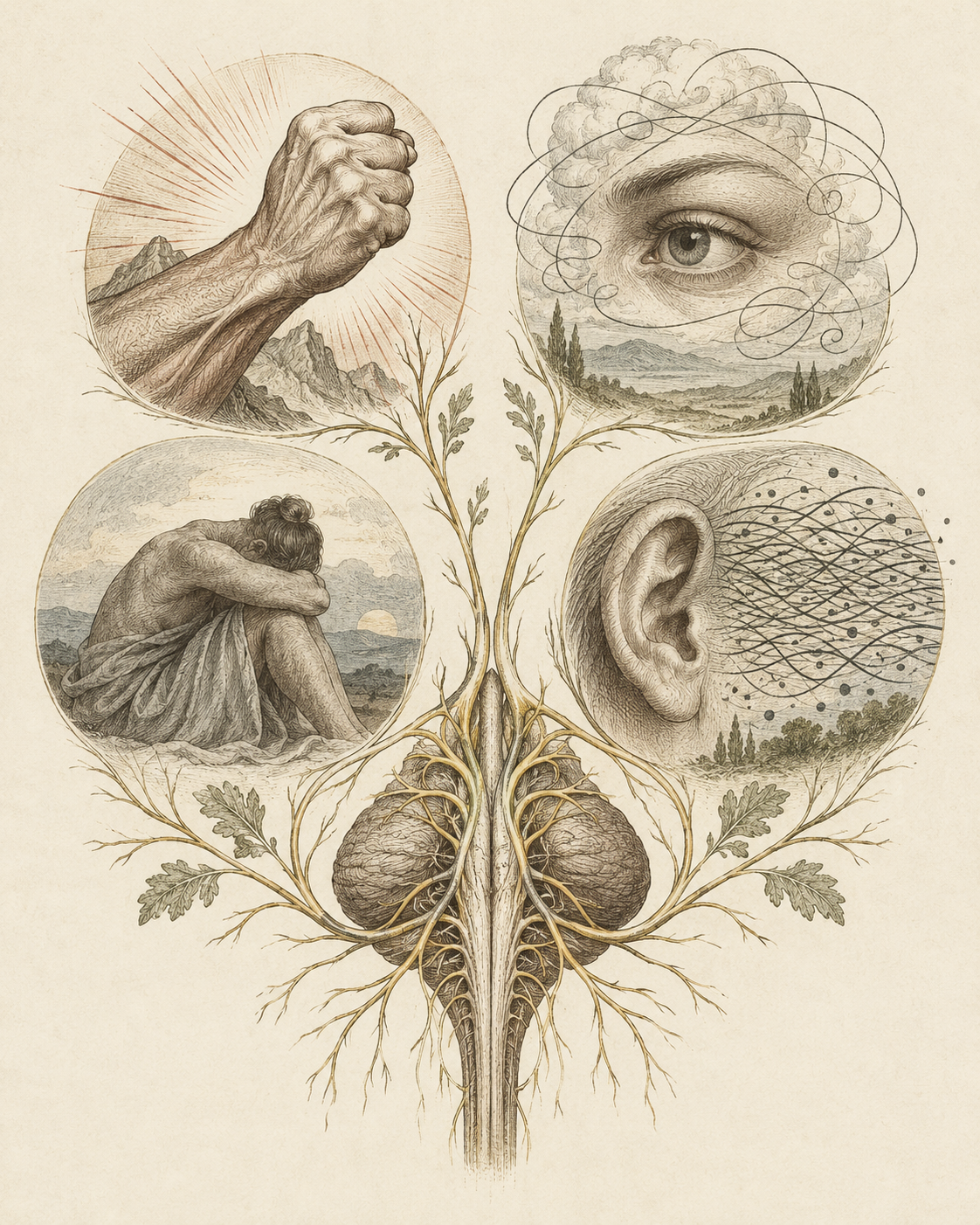
THE WORD 'STRESS' CAN HIDE THE PART THAT ACTUALLY MATTERS
Two Bad Days Can Need Opposite Things
Monday is chaos.
Emails. Deadlines. People asking for things. Noise. Traffic. Dinner. You feel mentally crowded.
A drink sounds appealing because you want everything to stop asking something from you.
Thursday is different.
One person says something that makes you furious. You replay it all the way home. Your jaw is tight. You want a drink because you want the heat in your body to come down.
You could call both nights “stress.”
But the first problem is overload.
The second is anger.
If you use the same intervention for both, it might work by accident.
Ten quiet minutes alone may be perfect for overload and terrible for anger if sitting alone just gives you more time to rehearse the argument.
A brisk walk may help anger and feel like one more demand when you are exhausted.
Precision matters because your old solution—alcohol—was broad. It changed state quickly enough that you did not have to name the state very well.
Now you do.

Why We Chose This For You
Loading your personalized notes…
NAMING THE STATE MORE PRECISELY CAN MAKE IT FEEL LESS MYSTERIOUS
You may notice that some states are much more dangerous for you than others.
Maybe anxiety is uncomfortable but rarely makes you want to drink.
Maybe resentment is the one that gets you.
Maybe exhaustion is the real pattern: once you are depleted enough, any inconvenience turns into “I deserve this.”
That can be surprising, especially if you have been telling yourself for years that alcohol is mainly about stress.
The category is still useful.
Now it is becoming specific enough to act on.
DIFFERENT STATES CREATE DIFFERENT ACTION TENDENCIES
Anger often comes with activation and an urge to act.
Anxiety can involve vigilance, uncertainty and repetitive future-focused thinking.
Exhaustion reduces available capacity.
Overstimulation can create a strong drive to reduce input.
These states overlap, but they are not interchangeable.
If alcohol has been used as a fast general-purpose state changer, your brain may have learned one response for many internal conditions.
The new skill is discrimination: noticing which state is present before reaching for the same old solution.
Better discrimination creates better matching.
WHY THIS MATTERS
Specific labeling helps you match the response to the function alcohol was serving in that exact moment rather than treating all distress as one problem.

A Note For You
Loading your personalized notes…

Recent Slip Insight
Add a Title
ONE BENEFIT TO WATCH FOR

Better Intervention Fit
You Stop Throwing the Same Solution at Every Bad Feeling
Once you separate stress into specific states, your toolkit can become much more useful.
Overwhelm may need subtraction.
Anger may need discharge or distance.
Anxiety may need grounding or information.
Exhaustion may need rest.
Overstimulation may need quiet.
Frustration may need a next step.
Alcohol used to be one broad answer.
You are building several better answers.
WHY THIS MATTERS
Specific labeling helps you match the response to the function alcohol was serving in that exact moment rather than treating all distress as one problem.

WHAT PEOPLE DON'T TELL YOU
The drink may have been the moment you finally allowed yourself to stop.
This is easy to miss.
You may think alcohol relaxed you.
Sometimes part of the relief was behavioral.
Once the drink was poured, work was over.
You stopped answering emails.
You sat down.
You stopped doing chores.
You became unavailable.
The alcohol and the permission arrived together so often that they started to feel like the same thing.
If that is your pattern, the intervention is not only “reduce stress.”
It may be learning to grant yourself the boundary before the drink grants it for you.
ONE BENEFIT TO WATCH FOR


“The more specific the feeling, the more specific the help can become.”
Cheers Without Beers

Your Version of Today's Experiment
Loading your personalized notes…

What to Take Away
Add a Title

Today's Experiment
Build Your Stress Fingerprint
Take one recent alcohol urge you would normally call stress and identify the specific state underneath it.


Choose One Real Moment
Use a recent craving, hard evening or slip. Write what happened without using the word stress.


Name the State Precisely
Choose the closest label—overwhelm, anger, anxiety, exhaustion, frustration, overstimulation or your own word. More than one is allowed, but rank them.

WHAT ARE YOU TESTING?
Can you describe your hard moment precisely enough that the right response becomes more obvious?
If 'stress' became a more specific state with a specific job, you have better information than you had yesterday.


Ask What Alcohol Was Supposed to Do
Finish this sentence: “In that moment, I wanted alcohol to ______.” The answer becomes the clue for tomorrow’s intervention test.

10–15 Minutes

What to Watch For
Loading your personalized notes…
WANT TO GO DEEPER?
Why Better Labels Lead to Better Behavior
A vague state creates vague coping.
Consider two internal messages:
“I’m stressed.”
“I have twelve unfinished tasks, people are still contacting me, and I need thirty minutes with no one asking me for anything.”
The second statement is longer, but the intervention is easier to see.
Now compare:
“I’m stressed.”
“I’m furious about what happened and I keep rehearsing what I should have said.”
Different problem. Different tool.
This is the value of emotional and situational granularity. You are not naming feelings to sound psychologically sophisticated. You are naming them because different states have different needs.
Alcohol can feel unusually efficient because it does not require that level of discrimination. It can be used broadly for reward, relief, avoidance, celebration, boredom or anger.
Your new system becomes stronger when it stops trying to replace one broad tool with one other broad tool.
Tomorrow we take the categories you identify today and test which interventions actually work for each one.
Name the Actual State
Stress is a category. Your pattern lives underneath it.
Replace 'I was stressed' with a more precise word, then ask what you wanted alcohol to do in that moment.


A Gentle Warning
Loading your personalized notes…
BEFORE YOU GO

Which kind of stress most reliably creates an alcohol urge for you?
Do not answer with 'all of it.' Think about overwhelm, anger, anxiety, exhaustion, frustration and overstimulation separately.

ONE THING TO TAKE WITH YOU
Specific State. Specific Response.
The goal is not to become better at tolerating a giant category called stress. It is to learn what kind of stress you are actually in and respond to that.

Your Best Stress Intervention
Tomorrow you will match your most common stress states with the tools most likely to work—and test the fit instead of guessing.