.png)
Day 36 of 365
Your Environment Is Voting
Your home, route, glassware, restaurants, routines and visual cues are not neutral. Today you notice what your environment makes easier—and redesign the highest-impact cues without turning your life into a bunker.

15
minutes
Deep Dive Optional
RESET SUPPORT

If You Keep Calling It Willpower While the Room Keeps Cueing the Old Routine
Look around the place where your plan slipped. Moving one cue or making an alternative easier to reach may help more than another promise.
EVERY SPACE HAS DEFAULTS
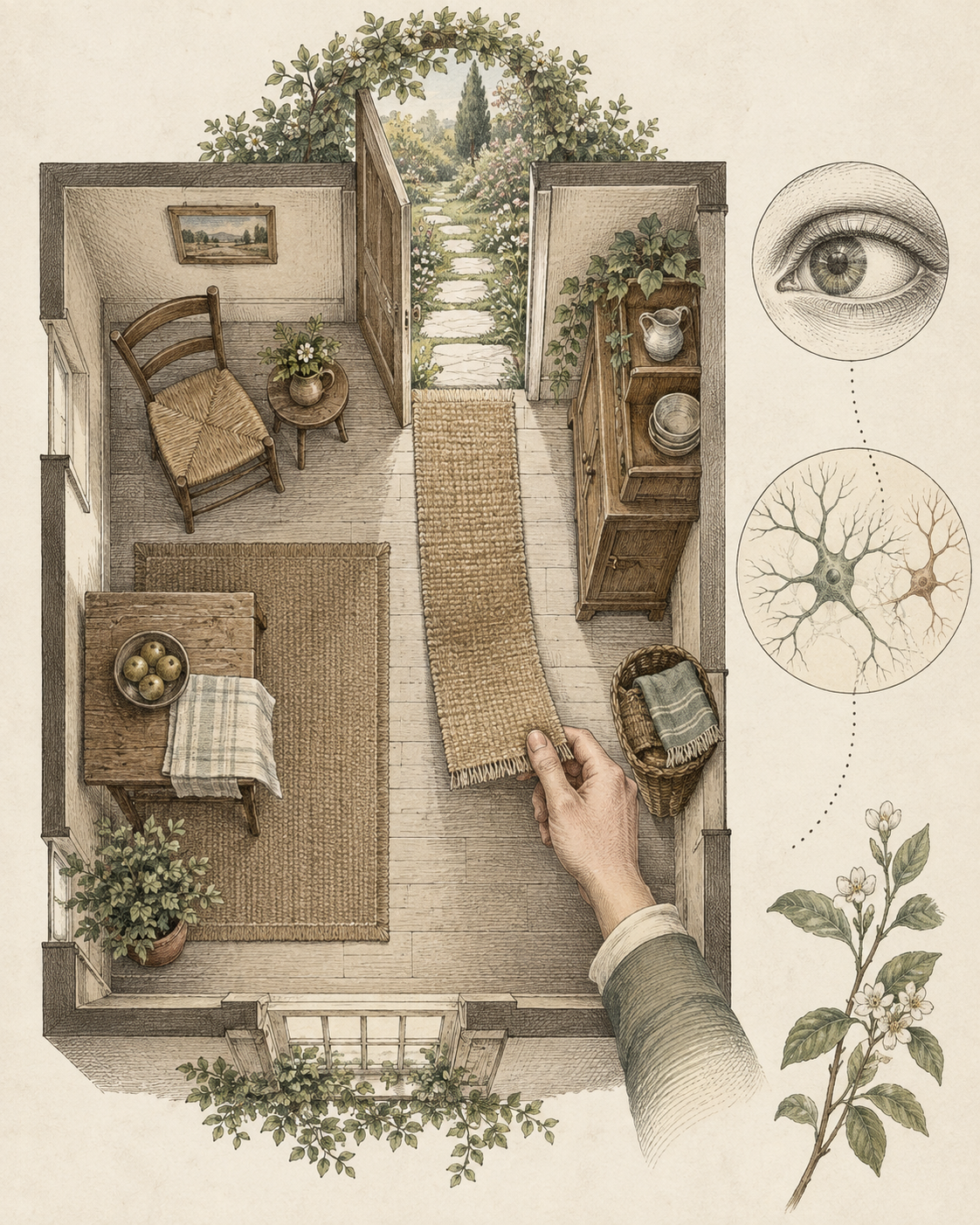
What Is the Room Suggesting You Do Next?
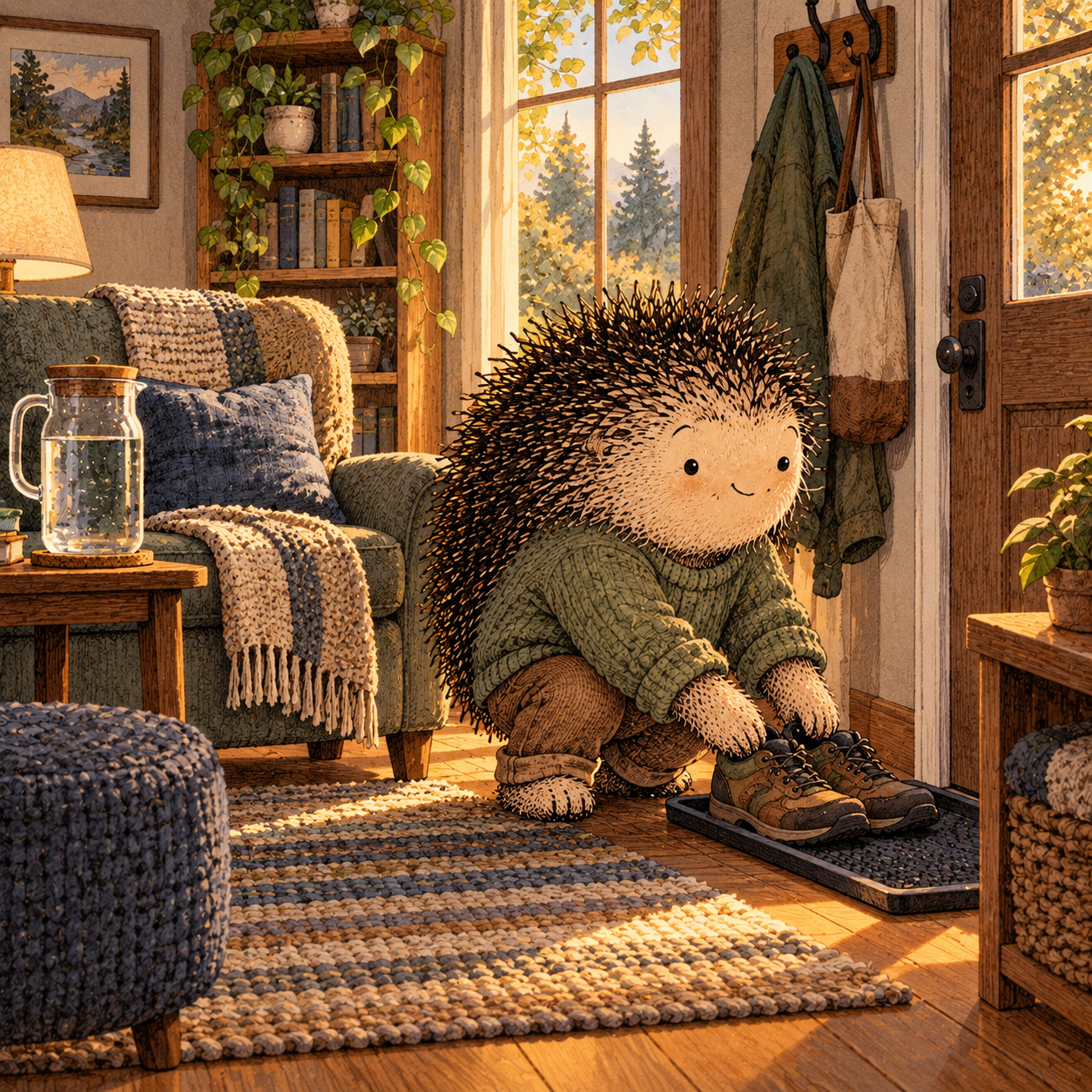
Walk into a movie theater and popcorn makes sense. Walk into a gym and movement makes sense. Sit at your old drinking spot at the old drinking time with the old glass in front of you, and the old sequence can feel strangely obvious.
That is not weakness. Environments carry instructions through repetition.
The bottle on the counter, the store on the route, the chair where you always poured the first drink, the restaurant where the server already knows the order—none of them forces a decision. But each one can make one decision easier to imagine and start.
The useful question is not only “Can I resist this?” It is also “Why am I asking myself to resist the same unnecessary cue every night?”

Why We Chose This For You
Loading your personalized notes…
SMALL CHANGES CAN FEEL RIDICULOUSLY EFFECTIVE
Moving a bottle, changing where you sit, taking a different route, or putting the alcohol-free option at eye level can feel almost too simple to count as a “real” tool.
That is exactly why it can work. The best intervention is not always the deepest one.
Sometimes you are asking psychology to solve an architecture problem. The environment keeps presenting the old choice first, fastest, and most visibly. Changing that setup can reduce the number of moments that ever become a craving battle in the first place.
CUES COMPETE FOR ATTENTION BEFORE YOU MAKE A CONSCIOUS DECISION
Visual, spatial, and contextual cues can activate learned associations quickly. The response is not deterministic, but cue exposure can make a familiar reward easier to notice, imagine, and value.
That matters because attention is part of the chain. A cue that repeatedly captures attention gives the old routine another chance to start before you have consciously decided anything.
Changing the environment does not erase the association. It reduces unnecessary activation while you build a competing routine—and it changes which behavior has the convenience advantage.
WHY THIS MATTERS
When the environment supports the behavior you want, you rely less on effort at exactly the moments when effort is often lowest. Repetition then gives the new setup a chance to become familiar instead of feeling like a temporary workaround.

A Note For You
Loading your personalized notes…

Recent Slip Insight
Add a Title
ONE BENEFIT TO WATCH FOR
Supportive Defaults
The Preferred Choice Can Become the Easy Choice
A better environment reduces the number of cues, decisions, and micro-negotiations you face. Over time, the alcohol-free routine can begin to feel less like the special exception and more like the ordinary setup of your evening. The benefit is not just fewer cravings; it is fewer moments that need to become a craving decision at all.
WHY THIS MATTERS
When the environment supports the behavior you want, you rely less on effort at exactly the moments when effort is often lowest. Repetition then gives the new setup a chance to become familiar instead of feeling like a temporary workaround.

WHAT PEOPLE DON'T TELL YOU
Keeping every cue in place to prove you can resist it is not a requirement for meaningful change.
Some people worry that moving alcohol, changing a route, or avoiding one restaurant means they are “not really learning” how to handle life.
But you do not prove that a new habit is real by keeping the old habit maximally convenient.
You can practice harder situations later, when there is a reason to. Right now, removing a pointless cue may free up attention for the parts of life you cannot redesign. Strength is not the ability to tolerate every unnecessary test. Sometimes strength is deciding the test does not deserve a place in your kitchen.
ONE BENEFIT TO WATCH FOR

“Willpower is one tool. Design the room so it does not have to be the only one.”
Cheers Without Beers

Your Version of Today's Experiment
Loading your personalized notes…

What to Take Away
Add a Title

Today's Experiment
Run a 10-Minute Environment Audit
Find the three environmental cues that most strongly vote for the old routine and change one today.


Walk the Old Route
Physically trace a typical drinking evening from arrival home to first drink. Notice what you see, touch, pass and do in order.


Find the Strongest Vote
Choose the cue that most efficiently starts the old sequence: bottle visibility, glassware, store route, a chair, a restaurant default or something else.

WHAT ARE YOU TESTING?
Can you make the environment support your intention before a craving or negotiation begins?
If one cue became less automatic, the environment is already voting differently.


Redesign One Friction Point
Make the alcohol choice less automatic and the preferred alternative more available. Keep the change simple enough to maintain for a week.

10–20 Minutes

What to Watch For
Loading your personalized notes…
WANT TO GO DEEPER?
Why Friction Changes Behavior
Small changes in convenience can alter repeated choices.
Behavior is sensitive to friction: how many steps, seconds, choices, reminders, or social moves sit between intention and action.
Reducing friction for the preferred behavior and adding modest friction to the old one can shift what happens most often. The effect may look small on a single night, but repeated environmental advantages compound because they influence behavior before motivation has to carry the full load.
The best changes are targeted. If alcohol in the house has never bothered you but the drive past the store does, clear the route before clearing the pantry. If the first visual cue in the fridge starts the sequence, change the fridge. Design around your actual cue hierarchy, not somebody else’s idea of what a “safe” environment should look like.
Change One Vote
The room is already shaping behavior. Make it shape the behavior you want.
Walk through the old drinking sequence, find the strongest environmental cue, and redesign it today.


A Gentle Warning
Loading your personalized notes…
BEFORE YOU GO

What object, place, route or routine quietly makes drinking feel like the obvious next step?
Walk through the environment instead of answering from memory. Physical details matter.

ONE THING TO TAKE WITH YOU
Your Environment Can Carry Part of the Load
You do not have to prove strength by surrounding yourself with unnecessary cues. Design the space to support the behavior you are practicing.

The First 15 Minutes
Tomorrow we build a highly specific plan for the opening minutes of a craving—before the story around it gets bigger.