top of page
.png)

Day 349 of 365
You Don't Need to Feel the Future Happening
Some of the most important changes are too gradual to produce a dramatic sensation while they are becoming true.

15
minutes
Deep Dive Optional
DAY 349

Progress Can Be Too Slow to Feel
Some changes remain hard to see from inside a rough evening. Use the evidence you've gathered over time before drawing a new conclusion.
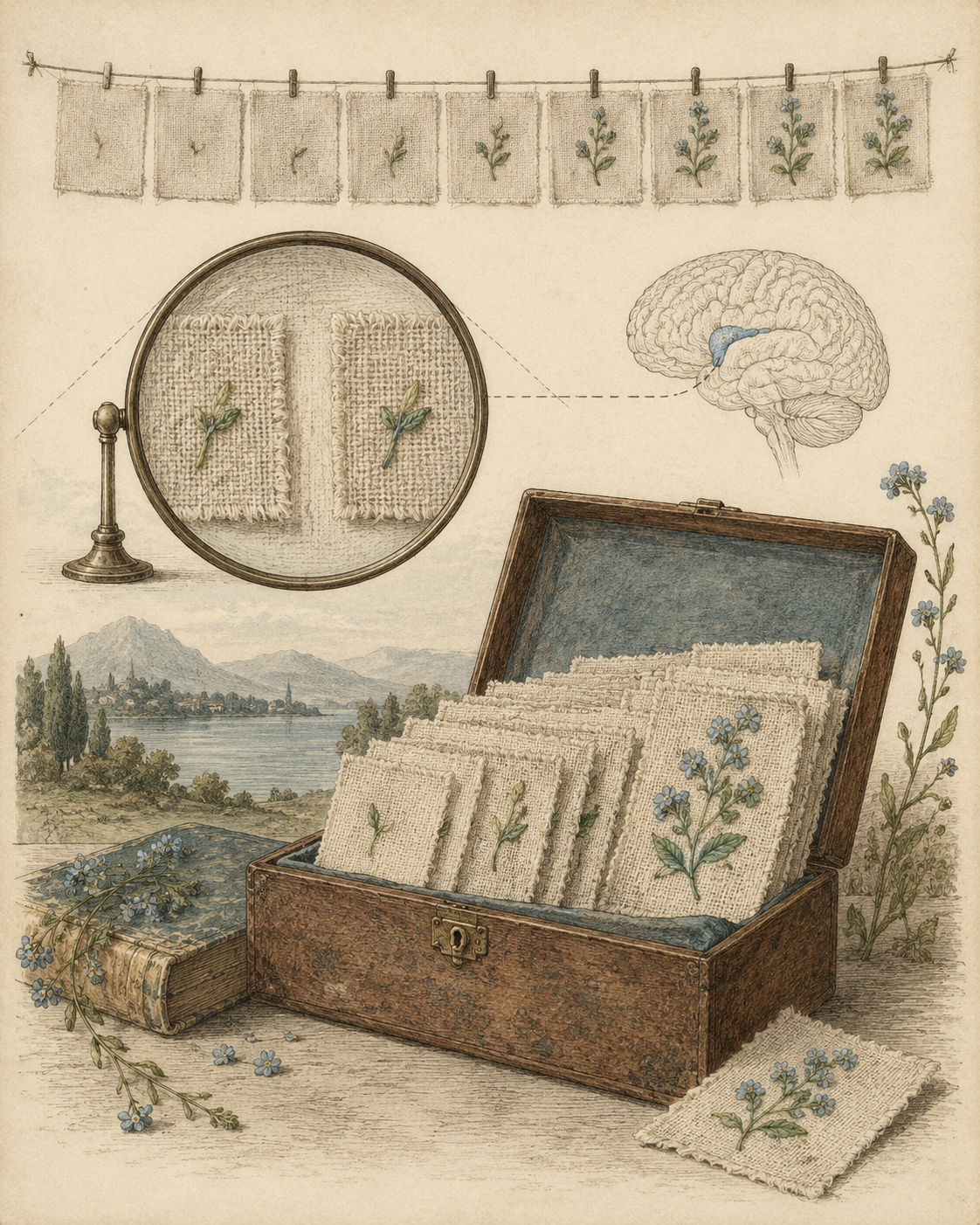
SOMETIMES YOU ONLY SEE CHANGE WHEN YOU FIND AN OLD VERSION
A Photo. A Message. An Old Sunday. A Memory of How Evenings Used to Feel.
You do not remember the exact day mornings got easier.
Or when the party stopped feeling like a test.
Or when your first thought after stress became something other than a drink.
There may not have been a day.
There were repetitions.
Then eventually there was a different normal.

Why We Chose This For You
Loading your personalized notes…
THIS IS NOT AN EXCUSE TO CALL NOTHING 'INVISIBLE PROGRESS'
If the outcome is not changing over time, the system may need adjustment. Invisible progress should eventually leave some evidence.
GRADUAL CHANGE CAN BE DIFFICULT TO PERCEIVE THROUGH CONTINUOUS SELF-OBSERVATION
Small incremental differences may be more noticeable when comparing points separated by a longer interval than when monitoring change day by day.
WHY THIS MATTERS
Comparisons across wider intervals can make gradual shifts more perceptible than repeated assessments separated by very little change.

A Note For You
Loading your personalized notes…

Recent Slip Insight
Add a Title
ONE BENEFIT TO WATCH FOR
Longer-Interval Comparison Can Reveal Improvements That Daily Self-Monitoring Makes Hard to See
You get evidence without requiring every day to feel rewarding or significant.
WHY THIS MATTERS
Comparisons across wider intervals can make gradual shifts more perceptible than repeated assessments separated by very little change.

WHAT PEOPLE DON'T TELL YOU
Invisible is not imaginary.
Look at behavior, consequences, routines and what requires less effort. If none of those are changing, curiosity is more useful than insisting progress must be happening.
THE BENEFIT OF DAY 349


“You do not have to feel yourself becoming different every day for a different normal to be forming.”
Cheers Without Beers

Your Version of Today's Experiment
Loading your personalized notes…

What to Take Away
Add a Title

Today's Experiment
Compare Across Distance
Choose one ordinary part of life and compare today with six months ago rather than yesterday.


Choose the Domain
Evenings, mornings, stress, social events, sleep, relationships or another repeated part of life.


Remember the Old Baseline
What required more thought, effort, recovery or negotiation then?

WHAT ARE YOU TESTING?
Can a wider comparison window reveal real change that became too gradual and ordinary to notice from one day to the next?


Name the Evidence
What concrete behavior or consequence is different now?

15 Minutes

What to Watch For
Loading your personalized notes…
WANT TO GO DEEPER?
Perceptual Adaptation
We adapt quickly to the conditions we repeatedly experience.
As a new state becomes familiar, its novelty decreases. That adaptation is useful, but it can also make improvements feel less noticeable once they become normal.
Look for Change Across Months
Compare farther apart.
Choose one ordinary life domain and compare today with six months ago, using concrete behavior rather than how transformed you feel.


A Gentle Warning
Loading your personalized notes…
BEFORE YOU GO

What improvement in your life has become so normal that you rarely give it credit anymore?
What would have felt noticeably different about this exact week six months ago?

TODAY'S TAKEAWAY
Normality Can Hide Progress
When improvement becomes ordinary, you may stop feeling it precisely because it has become part of the baseline.

Small Choices Need Time to Become Visible
Tomorrow we look at the lag between behavior and evidence—and why abandoning a useful direction too early can keep you from seeing what repetition was beginning to build.

bottom of page