.png)
Day 33 of 365
HALT — But Smarter
Hungry, angry, lonely and tired can all increase vulnerability—but a useful plan learns which of those states actually matter in your life, when they matter, and what they tend to trigger next.

15
minutes
Deep Dive Optional
RESET SUPPORT

If HALT Has Always Felt a Little Too Generic
Check the ordinary things before building a complicated explanation: food, company, rest, or a little quiet. A depleted evening deserves a practical response.
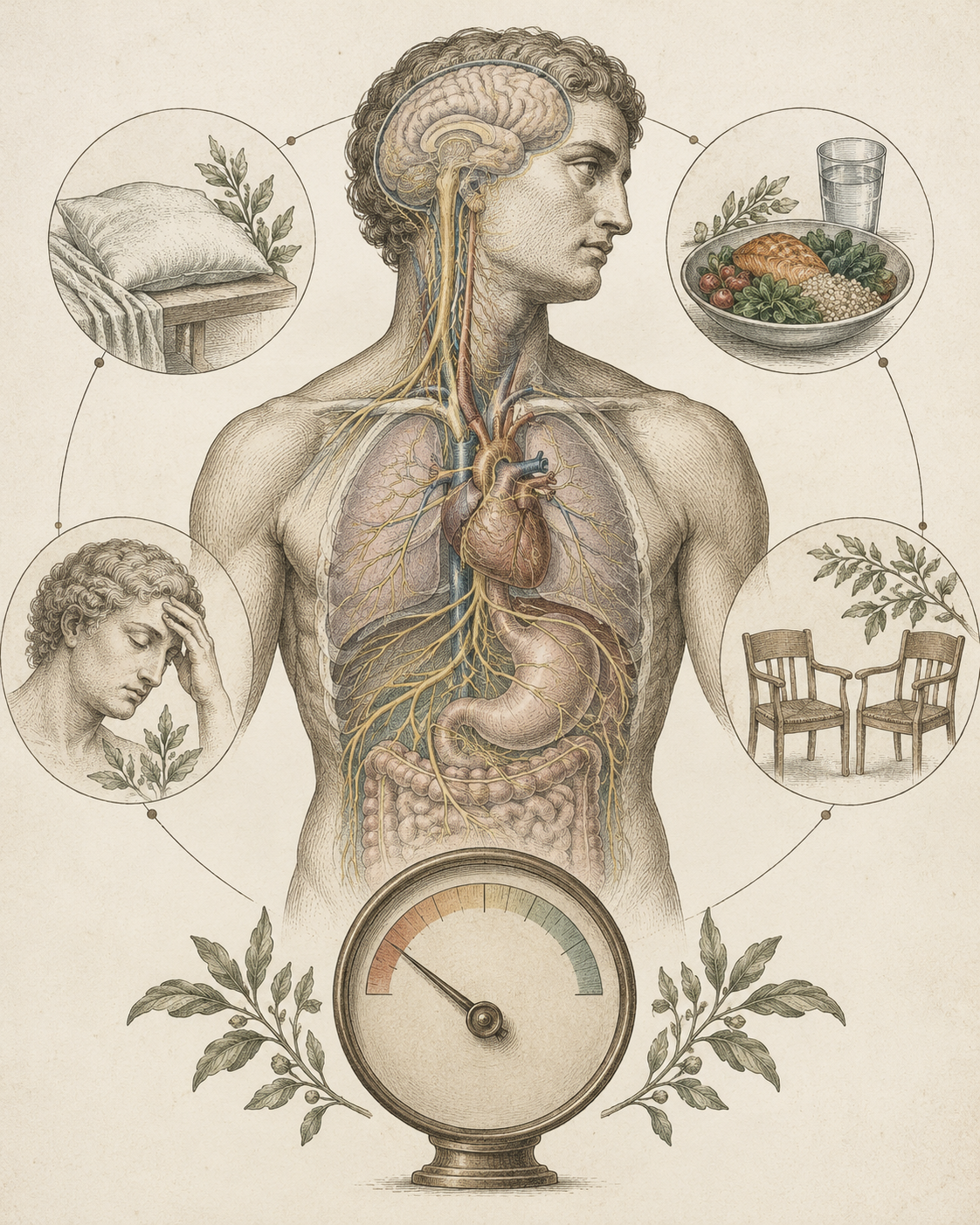
A GOOD TOOL GETS MORE USEFUL WHEN IT GETS MORE SPECIFIC
Find Your Version of HALT
Two people can both say they drink when stressed and mean completely different things.
One skips lunch, gets home shaky and irritable, and pours a drink while cooking because everything suddenly feels harder. Another eats normally but reaches 9 PM depleted after solving everyone else’s problems all day. A third is not hungry or tired at all; they feel rejected after an argument and want the sharpness of the evening to disappear.
All three could be described as “vulnerable.” Only one is primarily hungry.
The point is not to memorize four letters. It is to discover which internal states reliably narrow your options—and what they look like before the alcohol thought arrives.

Why We Chose This For You
Loading your personalized notes…
YOU MAY NOTICE THE URGE IS SOMETIMES A LATE SIGNAL
You may notice that the craving is sometimes a late signal.
By the time “a drink sounds amazing” appears, the useful intervention may have been needed an hour earlier. You were already hungry. Already overloaded. Already lonely. Already exhausted. Already resentful that everyone needed one more thing from you.
That can be frustrating because it means the urge did not begin when you noticed it. It is also encouraging. Earlier signals give you more options, and they usually ask less of you than a peak-craving rescue plan.
LOW RESOURCES CAN MAKE SHORT-TERM REWARDS MORE ATTRACTIVE
Fatigue, hunger, emotional strain, and social disconnection can change attention, patience, and the value we place on immediate relief. They do not mechanically cause drinking, and the same state will not affect everyone the same way.
What matters is reduced margin. When your margin gets thin, a familiar fast reward can become more attractive while long-term plans feel farther away.
That is why prevention often works better upstream. You are not trying to become perfectly regulated. You are learning the conditions under which your decision-making becomes narrower so you can intervene while you still have choices.
WHY THIS MATTERS
Earlier interventions often require less effort because they address the conditions amplifying the urge before the urge peaks. They also help you match the response to the actual state instead of treating every hard moment as the same problem.

A Note For You
Loading your personalized notes…

Recent Slip Insight
Add a Title
ONE BENEFIT TO WATCH FOR

Early Detection
You Can Intervene Earlier
When you learn your personal vulnerability signals, you can act before the craving becomes the whole story. Food, rest, space, connection, a boundary, or ten quiet minutes may be much easier to use at 4:30 than a heroic coping strategy at 8:30. The benefit is not perfect prevention; it is catching more hard nights while they are still small.
WHY THIS MATTERS
Earlier interventions often require less effort because they address the conditions amplifying the urge before the urge peaks. They also help you match the response to the actual state instead of treating every hard moment as the same problem.

WHAT PEOPLE DON'T TELL YOU
If tired is a 9 and lonely is a 2, treating them equally hides the useful signal.
HALT is memorable, which is why it survived. But memorable is not the same as personalized.
If exhaustion repeatedly precedes your hardest nights and hunger almost never does, you do not need to pretend all four letters deserve equal attention. And if resentment, overstimulation, or feeling unappreciated matters more than “anger,” put the real word on your list.
A good tool should become more specific as it learns you. By this point in the Reset, your own data deserves more authority than the acronym.
ONE BENEFIT TO WATCH FOR


“The craving may be the headline. Your state is often the story underneath it.”
Cheers Without Beers

Your Version of Today's Experiment
Loading your personalized notes…

What to Take Away
Add a Title

Today's Experiment
Build Your Personal HALT+
Test which vulnerability states actually predict harder evenings for you.


Score the Four
Rate hunger, anger, loneliness and tiredness from 0–10 for how much each one has affected your urges during this Reset.


Add the Missing State
Name one condition that matters more than at least one of the four: overstimulation, resentment, boredom, anxiety, feeling unappreciated, decision fatigue or something else.

WHAT ARE YOU TESTING?
Can you identify the vulnerability states that predict your hard moments early enough to do something useful?
If you found one earlier signal you can act on, you made the tool smarter.


Choose the Earliest Intervention
For your top two states, write the earliest practical move you can take before the drinking thought gets loud.

10–20 Minutes

What to Watch For
Loading your personalized notes…
WANT TO GO DEEPER?
Why “Upstream” Often Beats Willpower
Earlier signals usually offer more options than peak cravings.
Behavior often looks sudden from the outside but develops through a chain of conditions. Fatigue changes patience. Hunger can change irritability and attention. Disconnection can increase the appeal of immediate reward. Overload can make one more deliberate decision feel unreasonable.
These effects are not destiny. They are vulnerability multipliers.
Mapping the chain earlier creates more intervention points: eat before the commute, take ten minutes before walking into the house, text someone before the lonely part of the evening, lower stimulation before you hit the wall. The goal is not perfect prevention. It is to stop waiting until the final urge is the only thing you can see.
Build HALT+
Use the acronym as a prompt. Let your life decide the answer.
Rank hunger, anger, loneliness and tiredness, add your missing state, and choose an early response for the top two.


A Gentle Warning
Loading your personalized notes…
BEFORE YOU GO

Which internal state makes you most likely to start bargaining with yourself?
Think about timing. What was already true 30–90 minutes before the urge?

ONE THING TO TAKE WITH YOU
Your Vulnerability Pattern Is Personal
Use HALT as a prompt, then let your own evidence decide which states deserve attention.

The Transition Problem
Tomorrow we look at the moments between roles—work to home, dinner to evening, social to alone—where old routines often slip in through the gap.