.png)
Day 31 of 365
Your Trigger Hierarchy
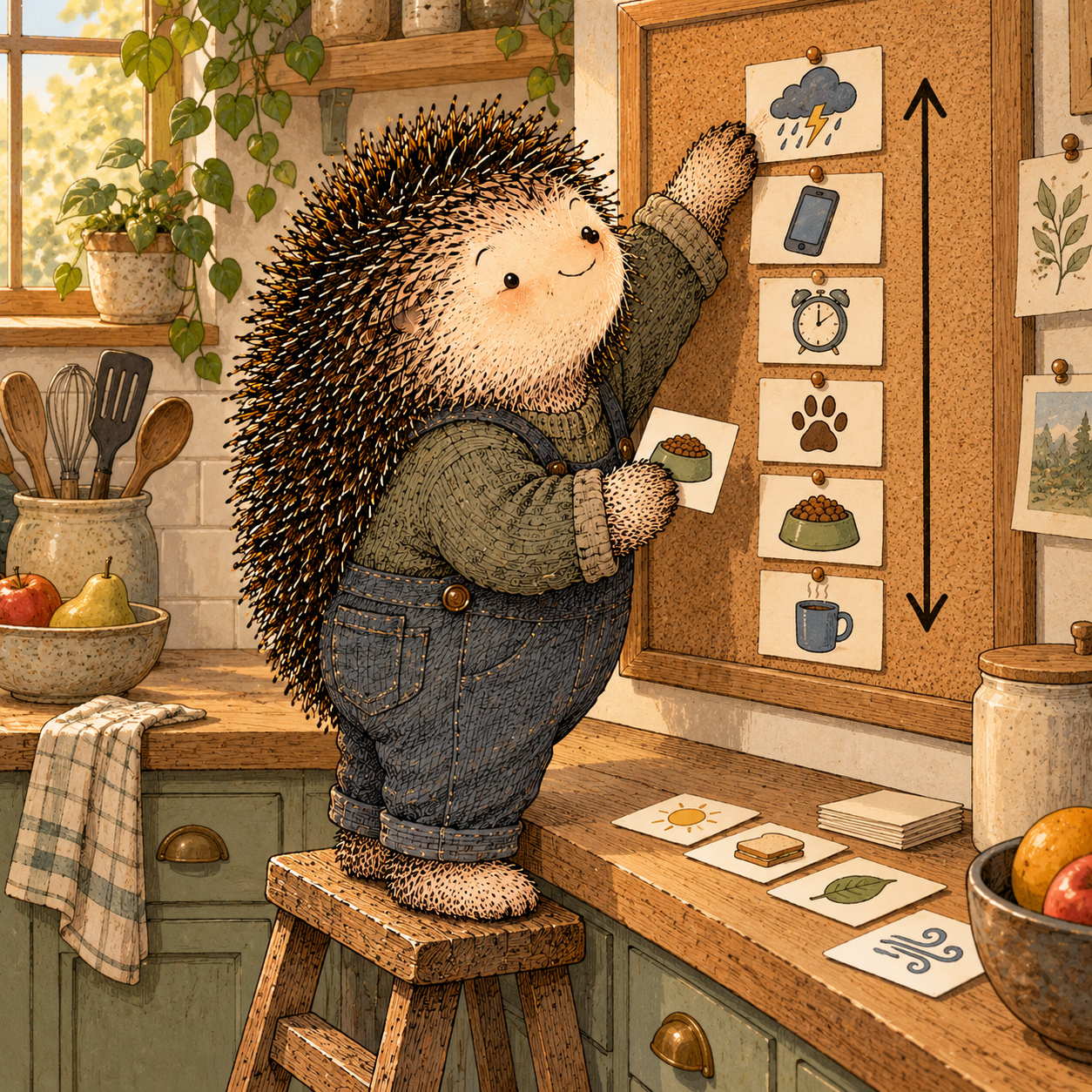
Not every trigger deserves the same amount of fear, planning or attention. Today you rank the situations that genuinely create difficulty so your energy goes where it actually matters.

15
minutes
Deep Dive Optional
RESET SUPPORT

If Everything Feels Like a Trigger
Some situations ask more of you than others. Give this one the support it actually needs instead of expecting the same plan to work everywhere.
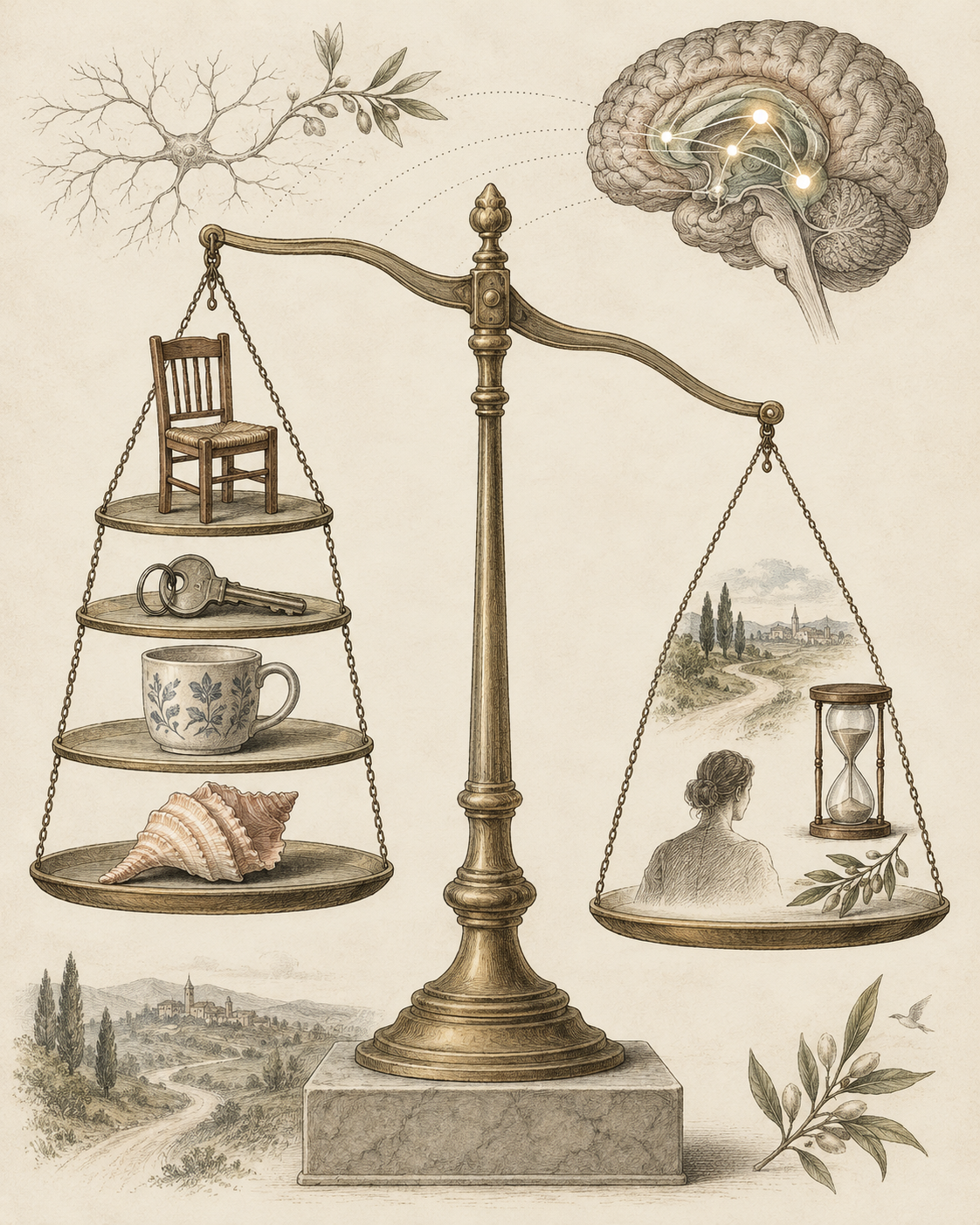
SOME TRIGGERS ARE LOUD. SOME ARE POWERFUL. THOSE ARE NOT ALWAYS THE SAME THING.
Rank the Pull, Not the Drama
A wedding may sound like the obvious “hard” event, yet you might handle weddings well because you arrive prepared, know why you are not drinking, and have a reason to leave when you want.
Then a random Thursday at 5:40 PM hits harder. You are tired, hungry, home alone, standing in the same kitchen where the old routine started hundreds of times. Nothing dramatic happened. Nobody pressured you. Your brain simply recognizes the scene.
That is why a useful trigger map is based on behavior, not reputation. The question is not “What should be hard?” It is “Where do I actually start bargaining, planning, romanticizing, or moving toward the old routine?”

Why We Chose This For You
Loading your personalized notes…
YOU MAY DISCOVER YOUR “BIGGEST” TRIGGER IS SURPRISINGLY ORDINARY
Many people expect parties, vacations or restaurants to sit at the top. Sometimes they do. Sometimes the hardest moment is much less impressive: finishing work, opening the garage, cooking dinner, being alone after the kids go to bed, or feeling unappreciated after carrying the day.
That can be strangely validating. You stop wondering why you handled the wedding but struggled on an ordinary Tuesday.
Ordinary does not mean weak. Repetition can make a quiet cue extremely efficient.
THE BRAIN LEARNS PREDICTION, NOT JUST EVENTS
Cues gain power when they repeatedly predict a reward, relief, or state change. The more consistent the sequence becomes, the less dramatic the cue has to be.
A certain chair, hour, route home, song, glass, person, or end-of-day feeling can become meaningful because the brain has learned what usually comes next. Anticipation can begin before you consciously decide anything.
Ranking triggers helps separate strong learned predictions from background noise. It also shows you where the prediction is already weakening—important evidence that not every old cue still deserves the same response.
WHY THIS MATTERS
A ranked map turns vague vigilance into targeted preparation. It helps you spend attention, planning, and support in proportion to actual risk rather than treating every reminder of alcohol as equally important.

A Note For You
Loading your personalized notes…

Recent Slip Insight
Add a Title
ONE BENEFIT TO WATCH FOR

Clarity
Your Plan Gets More Efficient
When you know which situations carry the strongest pull, you can prepare earlier, use stronger tools where they are actually needed, and stop overengineering easy moments. The evening becomes less about being “on guard” everywhere and more about being ready in the few places that consistently deserve your attention.
WHY THIS MATTERS
A ranked map turns vague vigilance into targeted preparation. It helps you spend attention, planning, and support in proportion to actual risk rather than treating every reminder of alcohol as equally important.

WHAT PEOPLE DON'T TELL YOU
The situation you talk about most can be easier than the quiet one you meet five nights a week.
Big events get attention because they are easy to name: weddings, vacations, parties, holidays. But the trigger that changes your behavior most may be boring enough that you barely mention it.
If you can walk through a wedding prepared but repeatedly start negotiating in the kitchen after work, the kitchen belongs higher on the list. That is not a failure of courage. It is useful information about repetition, timing, and cue strength.
A trigger hierarchy is not a list of everything connected to alcohol. It is a list of where your behavior actually changes.
ONE BENEFIT TO WATCH FOR

“Do not give every trigger equal power. Let your own behavior decide the ranking.”
Cheers Without Beers

Your Version of Today's Experiment
Loading your personalized notes…

What to Take Away
Add a Title

Today's Experiment
Build Your Trigger Ladder
Rank your real-life triggers by pull, frequency and how much planning they deserve.


List the Last 10 Real Triggers
Use actual moments from the Reset—not hypothetical ones. Include time, place, people, emotion and what happened next.


Score Pull and Frequency
Rate each trigger 0–10 for urge intensity and mark how often it occurs. Notice which ones are both strong and common.

WHAT ARE YOU TESTING?
Can you identify the few situations that deserve most of your preparation instead of treating every cue as equally dangerous?
A useful hierarchy leaves you with three priorities, not thirty fears.


Choose the Top Three
Pick the three triggers that deserve a specific plan this month. Everything else can stay on the map without becoming the center of your attention.

10–20 Minutes

What to Watch For
Loading your personalized notes…
WANT TO GO DEEPER?
Why Repeated Cues Become Efficient
A trigger can get powerful without being dramatic.
Repeated cue-reward pairings make prediction more efficient. Over time, the cue can produce anticipation before the reward arrives. That is why the beginning of a familiar routine can feel charged even when you have consciously decided not to drink.
But learned cues are not all-or-nothing. Their strength depends on context, repetition, recent experience, and what happens after the cue. If the old sequence is interrupted again and again, the prediction can gradually become less useful.
The practical move is not to argue with every cue. Identify the ones that still produce meaningful pull, then change what follows those cues often enough that your brain gets new data.
Rank the Real Ones
A trigger list tells you what exists. A hierarchy tells you what matters.
List real triggers, score their pull and frequency, and choose the top three that deserve a plan.


A Gentle Warning
Loading your personalized notes…
BEFORE YOU GO

Which trigger is genuinely hardest for you—and which one have you been giving too much credit?
Use specific moments: “Friday at 6 after work” is more useful than “weekends.”

ONE THING TO TAKE WITH YOU
Specific Beats Vigilant
You do not need to fear every cue. You need to know which ones reliably change your thinking or behavior and prepare for those.

The Difference Between Wanting and Needing
Tomorrow we separate anticipation from necessity so an urge can feel real without being interpreted as proof that you have to act on it.