.png)
Day 27 of 365
Know Your High-Risk Moments
You do not need to fear every situation. You need to recognize the few combinations that reliably make an old response feel unusually attractive.

15
minutes
Deep Dive Optional
RESET SUPPORT

If You Got Caught in a High-Risk Moment
A difficult situation is easier to prepare for once you can describe it. Capture the setting and timing while they're still clear.
RISK IS USUALLY A COMBINATION
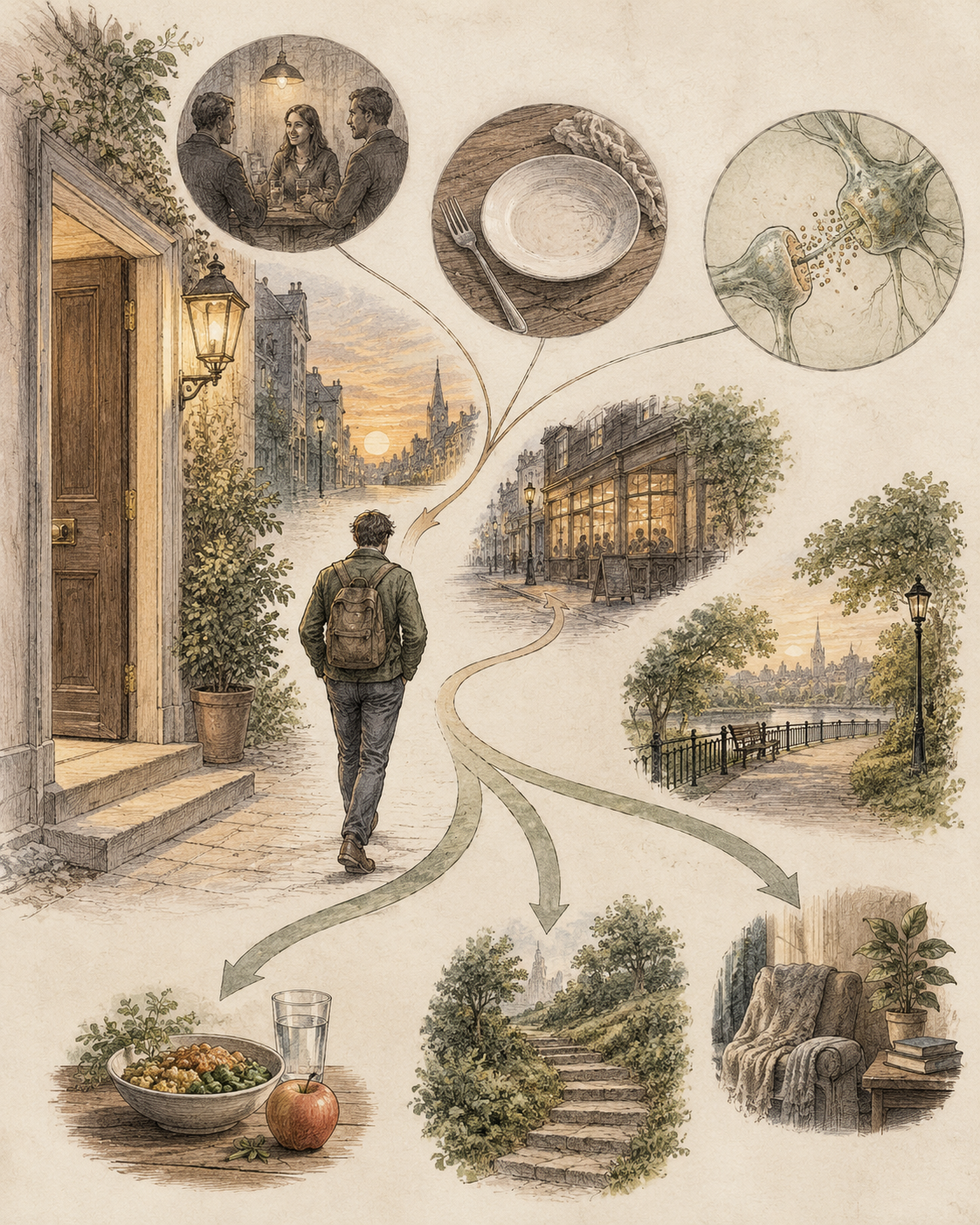
The Moment Has a Fingerprint
“I wanted a drink” is true, but it is usually not the whole story.
Maybe it was 5:45 PM and you had skipped lunch.
Maybe you were driving home after the same meeting that drains you every week.
Maybe it was your brother's house, the cooler was already open, and somebody handed you one before you had fully decided anything.
Maybe you were alone in a hotel room. Maybe it was date night. Maybe you were angry. Maybe you were celebrating.
High-risk moments often have fingerprints.
Time. Place. Person. Emotion. Body state. Event. Thought.
Once you start seeing those pieces, the moment stops looking random.
And predictable is easier to prepare for.

Why We Chose This For You
Loading your personalized notes…
SOME DAYS ARE HARD BECAUSE THREE SMALL THINGS STACK
It can be uncomfortable to realize how predictable some urges are.
Part of you may think, “So I am just programmed?”
No.
A pattern is not destiny. It is information.
If you know the rain usually starts at 5 PM, carrying an umbrella is not weakness. It is using the forecast.
A trigger map does the same thing for behavior.
VULNERABILITY CHANGES THE VALUE OF A CUE
Repeated behavior becomes associated with context.
The brain can learn that a certain person, room, time, route, body state, or emotional state predicts the old reward. Those cues can increase attention and anticipation before you consciously think, “I want a drink.”
That is why changing only the final decision can feel unnecessarily hard.
You can intervene earlier.
Change the context. Change the sequence. Meet the physical need. Prepare the response. Reduce access. Add support.
The earlier the intervention, the less momentum the old routine has.
WHY THIS MATTERS
The best intervention is often the one that happens before the moment becomes dramatic.
Preparation turns “I hope I make the right choice” into a concrete sequence you have already thought through.

A Note For You
Loading your personalized notes…

Recent Slip Insight
Add a Title
ONE BENEFIT TO WATCH FOR

Preparedness
Fewer Situations Catch You Cold
A trigger map gives you earlier warning.
Earlier warning means more options.
It is much easier to eat at 4:30, change your route, or text an ally before the urge peaks than to invent a strategy when the old routine is already loud.
WHY THIS MATTERS
The best intervention is often the one that happens before the moment becomes dramatic.
Preparation turns “I hope I make the right choice” into a concrete sequence you have already thought through.

WHAT PEOPLE DON'T TELL YOU
Not every high-risk situation needs the same answer.
Some situations are worth avoiding for a while.
Others are worth practicing because you need them back in your life.
Some need an exit plan. Some need food. Some need another person. Some need a boundary. Some only need a different first thirty minutes.
Your map is not a list of places you are forbidden to go.
It is a way to choose support intelligently.
ONE BENEFIT TO WATCH FOR
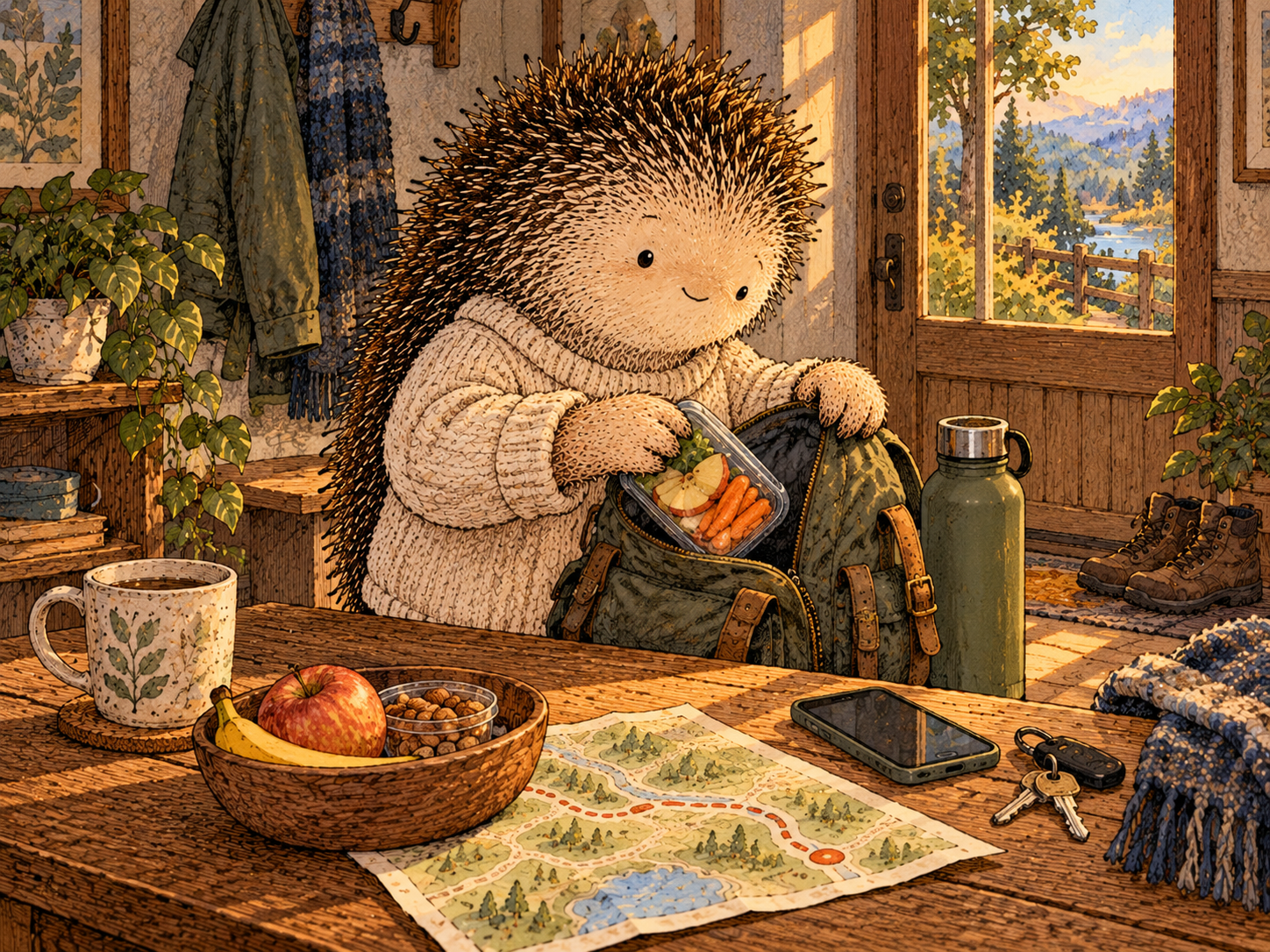

“Predictable does not mean inevitable.”
Cheers Without Beers

Your Version of Today's Experiment
Loading your personalized notes…

What to Take Away
Add a Title

Today's Experiment
Build Your Trigger Map
Use real moments from this month, especially slips, close calls and surprisingly easy wins.


Find the Top Three
Choose the three situations that created the most pull, bargaining or vulnerability.


Write the Full Fingerprint
For each: time, place, person, emotion, physical state, event and permission-giving thought.

WHAT ARE YOU TESTING?
Can you recognize your highest-risk situations early enough to change the setup?
If you can describe your top three high-risk moments so clearly that another person could picture them, the map is useful. Attach one early move to each.


Attach the Response
Choose one prevention move, one in-the-moment move and one exit/recovery move for each situation.

10–20 Minutes

What to Watch For
Loading your personalized notes…
WANT TO GO DEEPER?
Why Context Matters So Much
Behavior is often easier to predict from the situation than from willpower alone.
Think of each high-risk moment as a combination rather than a single trigger.
“Friday” may not be enough.
Friday + tired + hungry + home alone + alcohol visible may be the actual pattern.
“Dinner out” may not be enough.
Dinner out + one particular friend + everybody ordering rounds + no plan for what you will drink may be the combination.
This matters because combinations give you more levers.
You may not be able to eliminate Friday. You can eat before you get home. You can change where the alcohol lives. You can schedule something at six. You can tell one person what you are doing.
Do not wait for the perfect intervention.
Change one or two pieces of the fingerprint and see whether the whole moment shifts.
Know the Top Three
Describe the scene, not just the urge.
Describe the scene precisely. Plan before it. Keep an exit available.


A Gentle Warning
Loading your personalized notes…
BEFORE YOU GO

Which combination of time, place, person, feeling or body state creates the most vulnerability for you?
Use one real scene instead of a category like “weekends” or “stress.”

ONE THING TO TAKE WITH YOU
High Risk Is a Situation, Not an Identity
You are mapping conditions that deserve support. Once you can see the pattern, you can change more than one part of it.

A Life That Doesn’t Need Escaping From
Tomorrow we zoom out. If alcohol was regularly used to escape parts of life, the long-term answer cannot only be better resistance. We look at what underneath the behavior may need to change.