.png)
Day 2 of 365
What Are You Actually Drinking?
Wine, beer, cocktails and hard seltzer look like completely different products. The active ingredient doing the intoxicating work is the same: ethanol.

10
minutes
Deep Dive Optional
RESET SUPPORT

Something Went Sideways?
You can understand alcohol better and still find yourself drinking. Be curious about the situation, without making it a judgment about you.
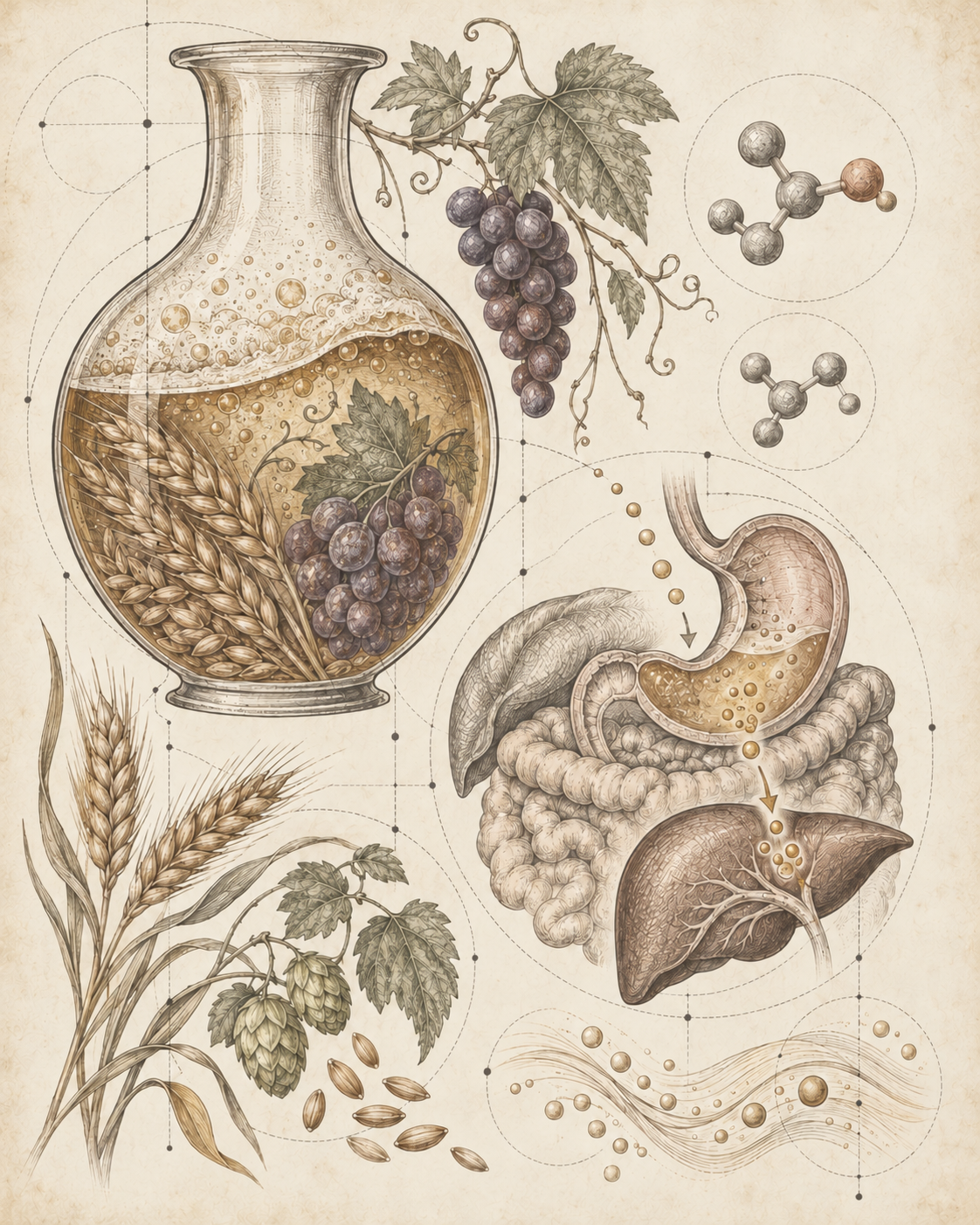
STRIP AWAY THE PACKAGING
Nobody Really Explains the Main Ingredient
Most of us learn alcohol by category, not by chemistry. Beer is for the game. Wine belongs with dinner. A cocktail feels like going out. Those categories are useful for ordering, but they can hide the one number your body actually has to deal with: how much ethanol is in the serving.
That is why a “glass” can be such a slippery unit. One wine pour may be five ounces; another may be eight. A tall craft beer can contain far more alcohol than a light beer even though both count as “one beer” in conversation. Home pours are even harder to eyeball because nobody is measuring the line on the glass.
Today is about removing that ambiguity. Not to make drinking sound sinister. Just to make the dose visible. Once you know what your usual drink contains, you can compare nights, pours and products with the same ruler.

Why We Chose This For You
Loading your personalized notes…
WHY THE LABEL CAN HIDE THE MAIN FACT
Beer can feel casual, wine grown-up and a cocktail like an occasion. Those stories are real, but the intoxicating ingredient is still ethanol. Seeing that plainly can feel surprisingly uncomfortable.
UNDER THE HOOD
After you drink, ethanol moves from the stomach and small intestine into the bloodstream. The liver then does most of the work of breaking it down. How strongly a given amount affects someone can vary with pace, food, body composition, medications, sex-related biology and other individual factors.
That variability is exactly why the label on the bottle cannot tell you how a night will feel. “Wine” is not a dose. “A couple beers” is not a dose. The useful starting point is how much alcohol arrived and how quickly it arrived.
Why Better Math Helps
Once the pour has a number attached to it, your memory has less room to round down. That matters because people are usually trying to remember a social evening, not perform an inventory audit. The glass gets topped off. The bartender pours heavy. The beer is 9 percent instead of 5. None of those moments feels dramatic, but together they can change the total considerably.
A more accurate estimate gives you something concrete to compare with sleep, mood, energy and next-day recovery. You are not trying to catch yourself doing something wrong. You are simply giving future-you better data.

A Note For You
Loading your personalized notes…

Recent Slip Insight
Add a Title
ONE BENEFIT TO WATCH FOR
Clarity
See the Drink Without the Costume
The immediate win is cleaner math. Once you know the alcohol in your normal pour, comparisons stop depending on how harmless or sophisticated the drink looks.
Why Better Math Helps
Once the pour has a number attached to it, your memory has less room to round down. That matters because people are usually trying to remember a social evening, not perform an inventory audit. The glass gets topped off. The bartender pours heavy. The beer is 9 percent instead of 5. None of those moments feels dramatic, but together they can change the total considerably.
A more accurate estimate gives you something concrete to compare with sleep, mood, energy and next-day recovery. You are not trying to catch yourself doing something wrong. You are simply giving future-you better data.

WHAT PEOPLE DON'T TELL YOU
A generous pour is not the same as one drink.
Home glasses, strong craft beer and tall cocktails can quietly contain more than one standard drink. The usual visual cues are unreliable.
ONE BENEFIT TO WATCH FOR
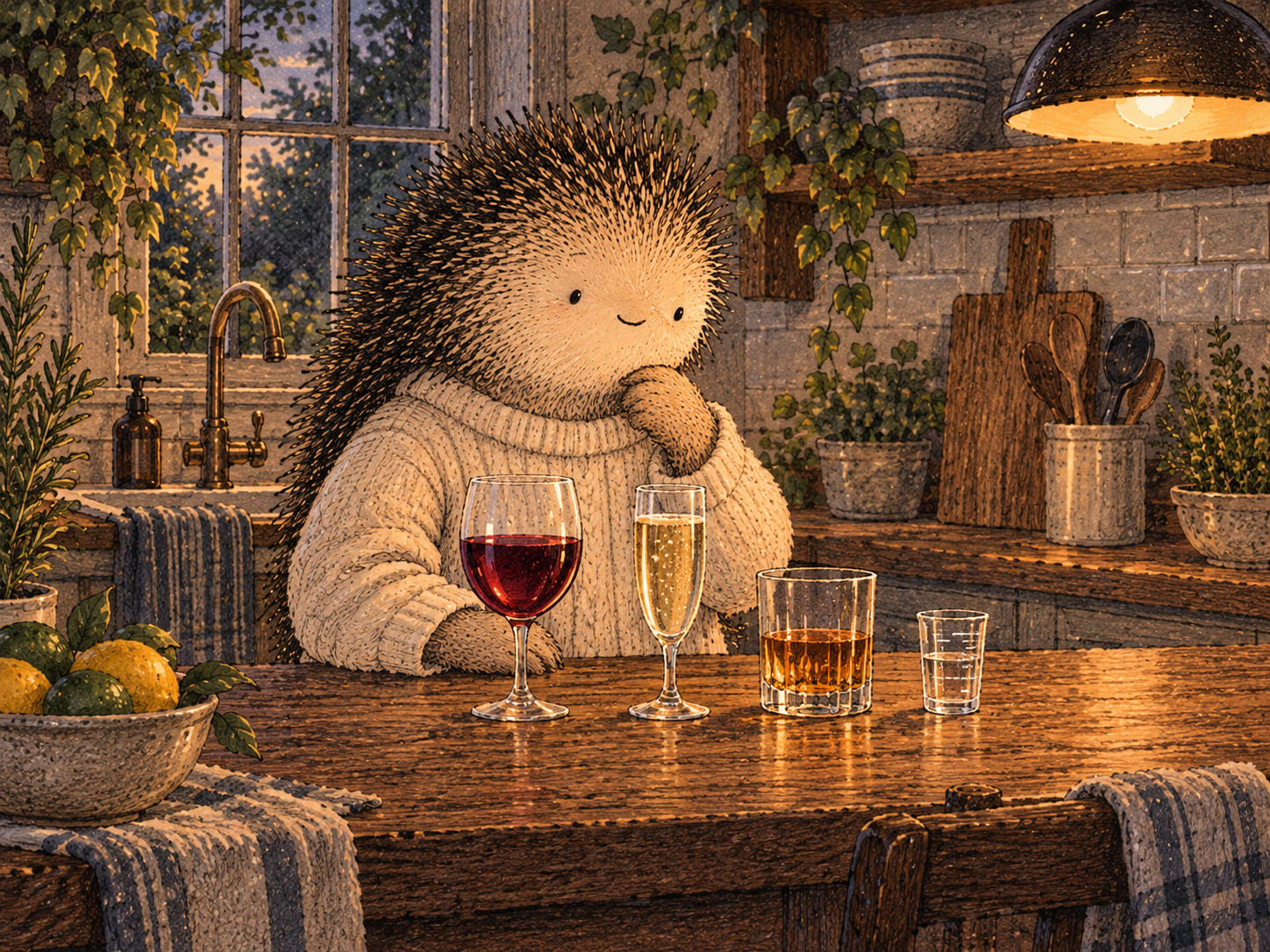

“Once you can see the dose, the costume has less power.”
YOUR RESET

Your Version of Today's Experiment
Loading your personalized notes…

What to Take Away
Add a Title

Today's Experiment
Translate Your Usual Drink
Choose the drink you pour or order most often. Check the size and alcohol percentage, then estimate the standard drinks it contains.


Name It
Write down the drink you most commonly reach for.


Strip the Label
Describe it without brand, occasion or lifestyle language: type, size, strength and how quickly you usually drink it.

Make the Invisible Measurable
Replace “a glass” or “a couple” with a number you can actually use. Accuracy is the win today.
Now you know what your usual drink is actually asking your body to process.


Notice the Story
Notice what the packaging or setting normally adds to the experience before the alcohol even arrives.

5–10 Minutes

What to Watch For
Loading your personalized notes…
WANT TO GO DEEPER?
Ethanol Without the Marketing Department
A drink name describes the package. A standard drink describes the alcohol inside it.
Standard drinks are useful, but they are not a prediction machine. Two people can consume the same amount and have different blood alcohol levels, subjective effects and next-day experiences. Even the same person can respond differently depending on food, pace, sleep, hydration and other circumstances.
So use standard drinks for what they are good at: translating very different beverages into a common unit. Do not use them as proof that you “should” feel a certain way.
There is another reason this matters. Marketing gives beverages personalities. A natural wine may feel cleaner than a canned cocktail. A local craft beer may feel more wholesome than a shot. Those impressions can shape expectation, but they do not remove the ethanol. Seeing both layers at once—the experience around the drink and the dose inside it—is a much clearer way to understand what you are actually consuming.
Count the Alcohol, Not the Containers
Different containers can deliver the same drug.
The type of drink changes the experience around it. Ethanol creates the intoxication.


A Gentle Warning
Loading your personalized notes…
BEFORE YOU GO

What surprised you when you translated your usual pour into standard drinks?
If nothing surprised you, note what became clearer. The point is precision, not alarm.

ONE THING TO TAKE WITH YOU
The Pour Tells You More Than the Label
When you know the dose, you can decide based on what is present—not what the glass is called.

Why Alcohol Feels So Good — At First
Tomorrow we get into the part people usually skip: why the first drink can feel so reliably good—and why the nervous system may ask you to pay some of that relief back later.