top of page
.png)
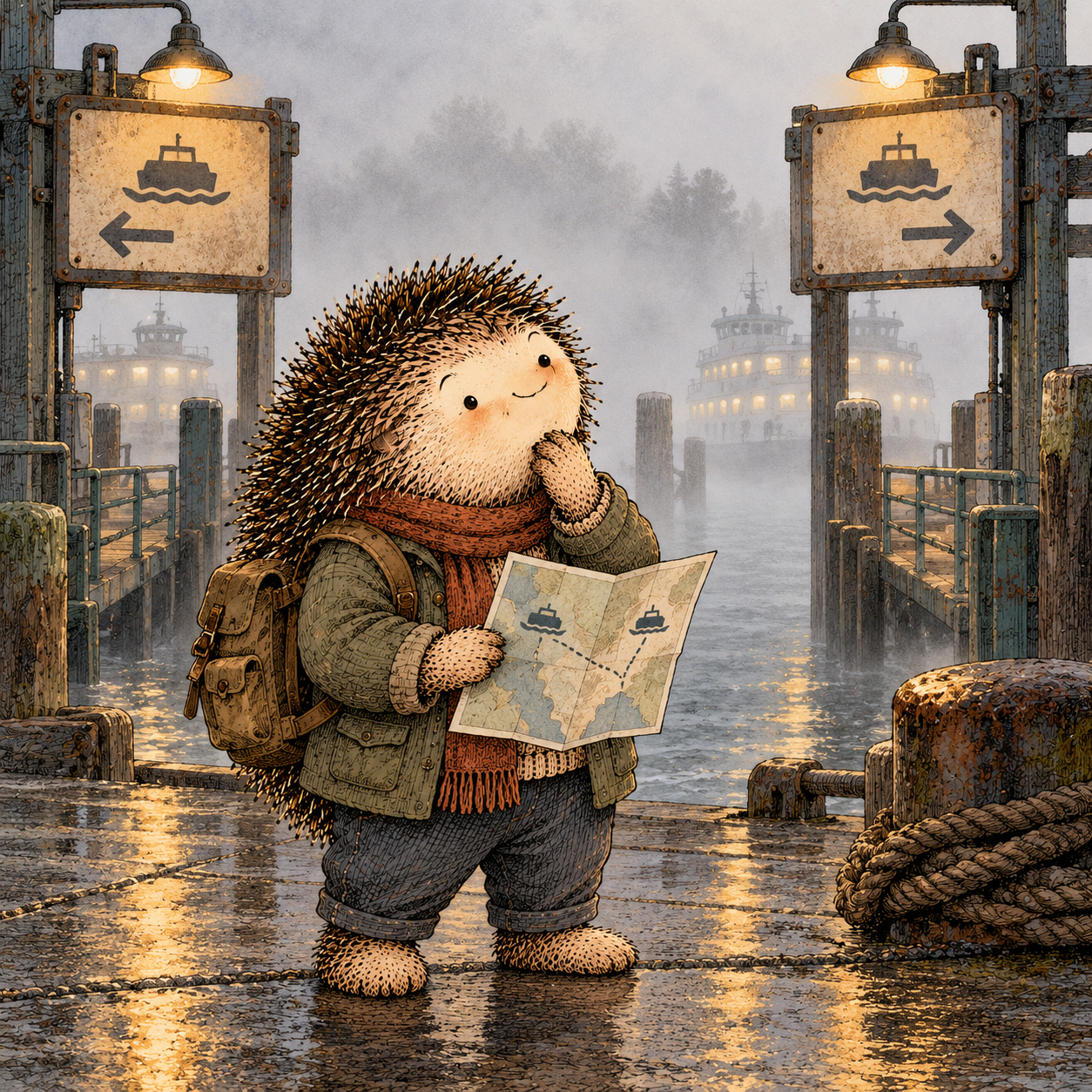
Day 138 of 365
Uncertainty
Not knowing can feel worse than bad news because the mind keeps trying to finish the story.

15
minutes
Deep Dive Optional
DAY 138

You Are Allowed Not to Know Yet
You can make a useful decision without knowing how everything turns out. Choose what supports you under the circumstances you can see today.

THE BRAIN OFTEN PREFERS A BAD STORY TO AN UNFINISHED STORY
At Least a Conclusion Feels Like Something to Hold
You are waiting.
No answer yet.
So the mind fills the gap.
They are not interested.
Something went wrong.
The result will be bad.
This is over.
None of that feels good.
But strangely, certainty—even negative certainty—can feel more tolerable than open-ended not knowing.
The challenge is remembering that discomfort is not evidence.

Why We Chose This For You
Loading your personalized notes…
WAITING CAN FEEL LIKE DOING NOTHING WRONG
You want action because action creates relief.
Check again.
Send another message.
Search.
Ask.
Plan three contingencies.
Sometimes action helps.
Sometimes the only honest move is waiting.
That can feel passive.
It is not.
Tolerating uncertainty without manufacturing an answer is a real skill.
UNCERTAINTY KEEPS PREDICTION SYSTEMS ACTIVE
The brain constantly predicts what will happen next.
When information is incomplete, prediction becomes harder.
That can increase vigilance:
checking,
imagining,
rehearsing,
seeking reassurance.
Those behaviors can briefly reduce uncertainty.
But if no new information exists, they may simply restart the loop.
WHY THIS MATTERS
Uncertainty can trigger prediction, checking and reassurance-seeking. Clearly separating known facts from unresolved questions can reduce the tendency to experience predictions as if they are current reality.

A Note For You
Loading your personalized notes…

Recent Slip Insight
Add a Title
ONE BENEFIT TO WATCH FOR
Keeping the Unknown in Its Own Box Can Stop Imagined Outcomes From Becoming Felt Facts
You may still worry.
But there is a difference between:
I do not know what they will decide,
and:
They are definitely going to reject me.
The first is uncomfortable.
The second makes you emotionally live through an event that may never happen.
WHY THIS MATTERS
Uncertainty can trigger prediction, checking and reassurance-seeking. Clearly separating known facts from unresolved questions can reduce the tendency to experience predictions as if they are current reality.

WHAT PEOPLE DON'T TELL YOU
Take the action that exists. Stop inventing one when it does not.
Prepare for the interview.
Make the appointment.
Ask the question.
Send the application.
Have the conversation.
Then, if the next piece belongs to someone else or to time, let it belong there.
You do not gain control by repeatedly pretending the answer should already exist.
THE BENEFIT OF DAY 138


“Not knowing is uncomfortable. It is not the same thing as something being wrong.”
Cheers Without Beers

Your Version of Today's Experiment
Loading your personalized notes…

What to Take Away
Add a Title

Today's Experiment
Keep the Unknown in Its Box
Take one uncertain situation and divide it into what is known, unknown, controllable and only answerable with time.


Write What You Know
Facts only. No predictions.


Write What Is Actually Unknown
Name the unanswered part without trying to solve it.

WHAT ARE YOU TESTING?
Can you tolerate an unfinished answer without filling the gap with the worst-case conclusion?


Do the Available Part
Take one useful action if it exists. Then let the remaining unknown stay open.

5 Minutes

What to Watch For
Loading your personalized notes…
WANT TO GO DEEPER?
Intolerance of Uncertainty
Some people find not knowing especially uncomfortable—not because they are weak, but because ambiguity itself feels threatening.
When uncertainty feels intolerable, people may seek:
more reassurance,
more information,
more checking,
or avoidance of uncertain situations altogether.
Those strategies can provide temporary relief.
But they can also teach the brain:
uncertainty is only safe once I get reassurance.
A different skill is learning that uncertainty can remain unresolved and still be survivable.
Known, Unknown, Controllable, Wait
Keep the unknown unknown.
Separate facts from unresolved questions, take the action that exists and stop treating uncertainty as proof of a bad outcome.


A Gentle Warning
Loading your personalized notes…
BEFORE YOU GO

What kind of uncertainty is hardest for you to leave unanswered?
Relationships, health, work, money, other people's opinions, plans, results, waiting for messages or something else.

TODAY'S TAKEAWAY
An Unanswered Question Is Still Just an Unanswered Question
Do what belongs to you. Let time, reality and other people provide the information that only they can provide.

Anticipatory Anxiety
Tomorrow we look at the anxiety that arrives before the event itself—and how the buildup can sometimes become harder than the thing you were anticipating.


bottom of page