top of page
.png)

Day 122 of 365
Name It More Precisely
The difference between irritated, rejected, embarrassed, disappointed and overwhelmed is not vocabulary trivia. Each points toward a different need.

15
minutes
Deep Dive Optional
DAY 122

Precision Gives You Better Information
A more exact word may reveal a more useful response. Was it disappointment, pressure, loneliness, or something else that needed attention?
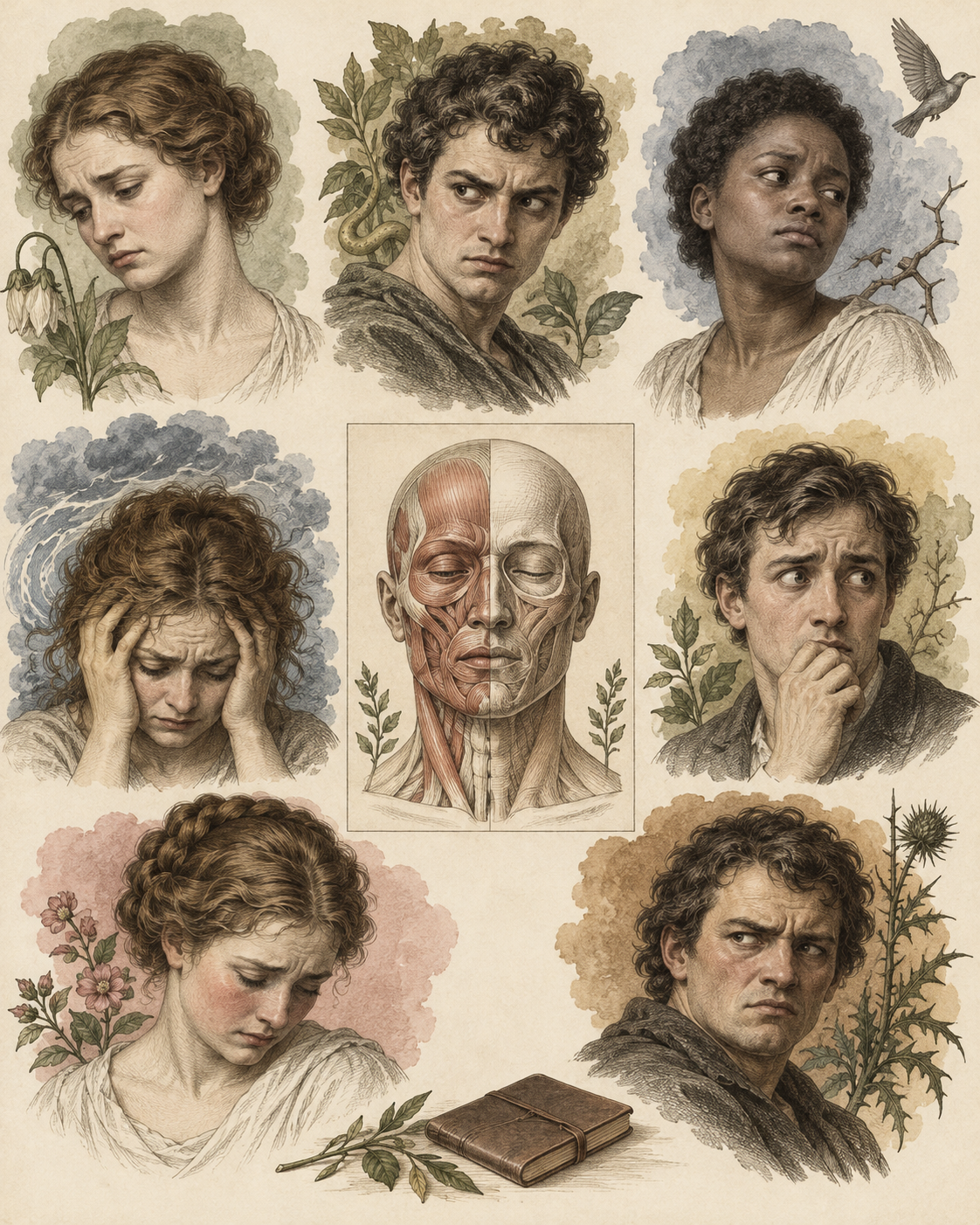
THE FIRST EMOTION WORD IS NOT ALWAYS THE MOST USEFUL ONE
The Loudest Feeling Can Cover a Quieter One
Someone corrects you in front of other people.
Your first response:
I am pissed.
True.
But underneath that?
Embarrassed.
Exposed.
Maybe disrespected.
Those details matter.
If you only respond to the anger, you may attack.
If you see the embarrassment too, you may understand why the moment landed so hard.
Precision does not make you passive.
It makes you less confused.

Why We Chose This For You
Loading your personalized notes…
PRECISION CAN FEEL VULNERABLE
“Angry” can feel strong.
“Left out” can feel exposed.
“Resentful” can feel ugly.
“Jealous” can feel embarrassing.
“Underappreciated” can feel needy.
That is one reason broad labels are comfortable.
They protect us from admitting the more specific thing.
But the specific thing is often where the useful information lives.
MORE GRANULAR EMOTIONAL LANGUAGE CAN IMPROVE DIFFERENTIATION
When people distinguish among emotional states rather than experiencing them as one undifferentiated negative mass, they gain more information about context and response.
You do not need clinical terminology.
Ordinary language works.
Disappointed.
Jealous.
Rejected.
Overwhelmed.
Nervous.
Embarrassed.
Resentful.
Specific enough is the goal.
WHY THIS MATTERS
Differentiating emotions more precisely can improve self-understanding and help match responses to the actual state rather than reacting to a vague sense of distress.

A Note For You
Loading your personalized notes…

Recent Slip Insight
Add a Title
ONE BENEFIT TO WATCH FOR

More Precise Language Can Stop One Emotion From Hijacking the Whole Story
If the real feeling is embarrassment, the response may be different from anger.
If it is uncertainty, more certainty may help.
If it is resentment, the answer may involve a boundary.
If it is loneliness, distraction may only delay the real need.
Precision will not always tell you what to do.
It gives you a better starting point.
WHY THIS MATTERS
Differentiating emotions more precisely can improve self-understanding and help match responses to the actual state rather than reacting to a vague sense of distress.

WHAT PEOPLE DON'T TELL YOU
You are not taking a vocabulary test.
If you cannot decide whether it is disappointment, sadness or frustration, pick the closest word.
The goal is not perfect classification.
It is moving from:
I feel terrible
to:
I have a better idea what kind of terrible this is.
THE BENEFIT OF DAY 122


“The more specific the feeling, the less mysterious the reaction.”
Cheers Without Beers

Your Version of Today's Experiment
Loading your personalized notes…

What to Take Away
Add a Title

Today's Experiment
Ask 'More Specifically?' Twice
Take one emotional moment today and ask yourself 'more specifically?' two times.


Use the First Word
Angry, stressed, sad, anxious, annoyed, fine—whatever arrives first.


Ask Once
More specifically, what did the situation make you feel?

WHAT ARE YOU TESTING?
Does emotional precision reveal information that the first broad label was hiding?


Ask One More Time
What did that feeling seem to be about: respect, uncertainty, belonging, fairness, failure, control, loss or something else?

2 Minutes

What to Watch For
Loading your personalized notes…
WANT TO GO DEEPER?
The Feeling Beneath the Reaction
You do not need to excavate childhood every time something annoys you.
Looking beneath the first reaction can be useful without becoming therapy.
The practical question is:
What made this moment matter?
Maybe it threatened:
respect,
belonging,
competence,
control,
fairness,
security,
or a hope you had.
That context can explain why two people experience the same event very differently.
You are not diagnosing yourself.
You are learning your own pattern.
Get One Layer More Precise
Ask 'more specifically?'
Start with the obvious feeling, then ask what more specific emotion—and what underlying concern—was actually involved.


A Gentle Warning
Loading your personalized notes…
BEFORE YOU GO

Which emotional word do you use as a catch-all when something does not feel good?
Stressed, angry, annoyed, tired, anxious, fine or another broad label.

TODAY'S TAKEAWAY
Specific Does Not Mean Complicated
You do not need a perfect emotional map. One more accurate word can be enough to change the next move.

Anger
Tomorrow we start working through specific emotions, beginning with one that can feel powerful, fast and completely justified in the moment: anger.


bottom of page