top of page
.png)

Day 114 of 365
Your Personal Decompression Window
Some people need movement. Some need quiet. Some need conversation. The point is not to copy a relaxation routine—it is to discover how you actually come down.

15
minutes
Deep Dive Optional
DAY 114

Find the Way You Actually Unwind
Protect a short gap between demands and evening decisions. Today's difficulty may be telling you that the transition needs more care.
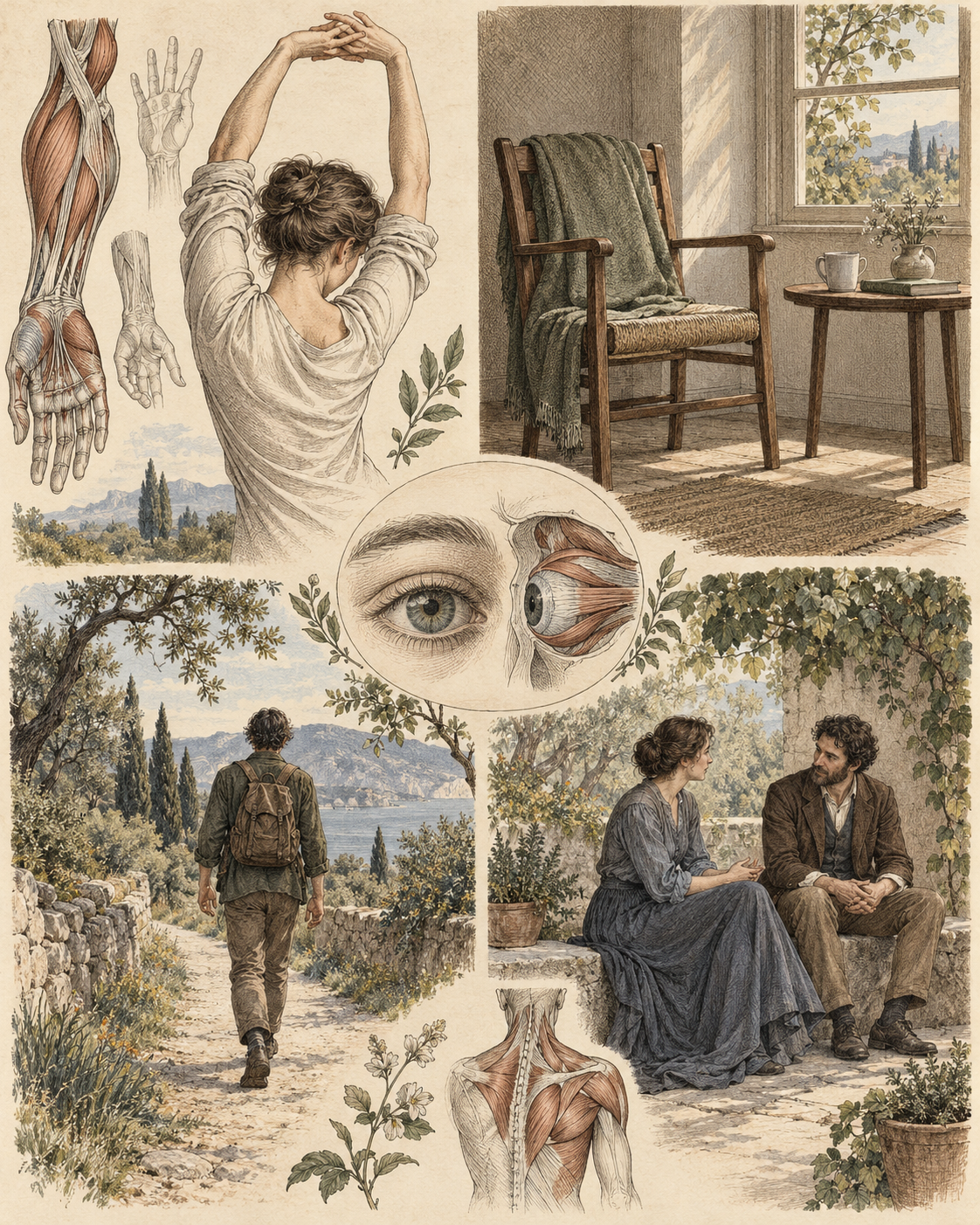
WHAT CALMS ONE PERSON CAN IRRITATE ANOTHER
Decompression Has to Fit the State You Are In
If you are physically restless after sitting all day, lying still may feel terrible.
If you are overstimulated after dealing with people for ten hours, a loud social activity may be the opposite of recovery.
If you are lonely, being alone may not help.
That is why generic relaxation advice fails.
The intervention has to match the state.

Why We Chose This For You
Loading your personalized notes…
GOOD DECOMPRESSION OFTEN FEELS LIKE PRESSURE DROPPING, NOT HAPPINESS ARRIVING
You may not feel amazing.
You may simply feel:
less tight,
less noisy,
less rushed,
less reactive.
That counts.
Recovery does not always produce joy.
Sometimes it just reduces the load enough that the rest of the evening becomes yours again.
STATE-MATCHING MATTERS
Different forms of stress and fatigue create different needs.
Physical tension may respond to movement.
Cognitive overload may respond to reduced input.
Social exhaustion may respond to solitude.
Loneliness may respond to connection.
There is no single best decompression tool because the starting state changes.
WHY THIS MATTERS
Recovery strategies tend to work better when they match the underlying state—physical tension, cognitive overload, social depletion or disconnection.

A Note For You
Loading your personalized notes…

Recent Slip Insight
Add a Title
ONE BENEFIT TO WATCH FOR
A Better-Matched Decompression Tool Can Work Faster Because It Solves the Right Problem
If you are overloaded, quiet may help.
If you are restless, movement may help.
If you are lonely, connection may help.
The benefit is not discovering one magic tool.
It is stopping the habit of using the same answer for every state.
WHY THIS MATTERS
Recovery strategies tend to work better when they match the underlying state—physical tension, cognitive overload, social depletion or disconnection.

WHAT PEOPLE DON'T TELL YOU
A hard workout may calm you more than sitting still.
Do not judge the tool by how peaceful it looks.
Judge it by:
what state you started in,
how you felt afterward,
and whether it created new problems.
That is your data.
THE BENEFIT OF DAY 114


“The best way to unwind is the one that matches what wound you up.”
Cheers Without Beers

Your Version of Today's Experiment
Loading your personalized notes…

What to Take Away
Add a Title

Today's Experiment
Match the Tool to the State
Before you decompress tonight, name your dominant state and choose one tool that specifically matches it.


Name the State
Restless, overloaded, lonely, irritated, mentally stuck, socially drained or something else?


Choose the Match
Movement, quiet, connection or a transition ritual. Pick the category that best fits tonight.

WHAT ARE YOU TESTING?
Can you improve recovery by matching the intervention to the actual state instead of reaching for a universal answer?


Rate the Shift
Did the pressure drop? Did the need change? Would you use this tool again for the same state?

15–20 Minutes

What to Watch For
Loading your personalized notes…
WANT TO GO DEEPER?
Why This Matters for Future Personalization
The same tool should not be recommended to everyone just because it helps some people.
This is one of the places where CWOB can eventually become much smarter.
If movement repeatedly helps your high-stress evenings, that matters.
If meditation rarely gets completed or leaves you more irritated, that matters too.
If social connection helps loneliness but makes overstimulation worse, that pattern matters.
A useful system should learn:
state,
tool,
response,
and whether the tool was worth repeating.
That is the difference between generic advice and personalized behavior change.
Build Your Decompression Window
Match the tool to the state.
Identify whether you need discharge, quiet, connection or transition, then test the tool that best fits tonight.


A Gentle Warning
Loading your personalized notes…
BEFORE YOU GO

When you are at your most overloaded, what kind of decompression actually helps—not what sounds healthy, but what works?
Movement, silence, shower, talking, music, driving, outside time, reading, chores, games, food or another pattern.

TODAY'S TAKEAWAY
Recovery Is Personal
Stop asking for the best way to relax. Ask what this particular state needs from you tonight.

Doing Nothing Without Drinking
Tomorrow we go after a surprisingly important skill: being unoccupied without immediately needing alcohol, a phone, food or another form of stimulation.


bottom of page