top of page
.png)
Day 103 of 365
Your Evening Hunger Pattern
Sometimes you are hungry. Sometimes you want the day to give you something. Those can feel surprisingly similar.

15
minutes
Deep Dive Optional
DAY 103

Find Out What the Night Is Asking For
If evenings repeatedly unravel around hunger, move food earlier in the plan. Treat the timing as something to adjust, not a personal shortcoming.
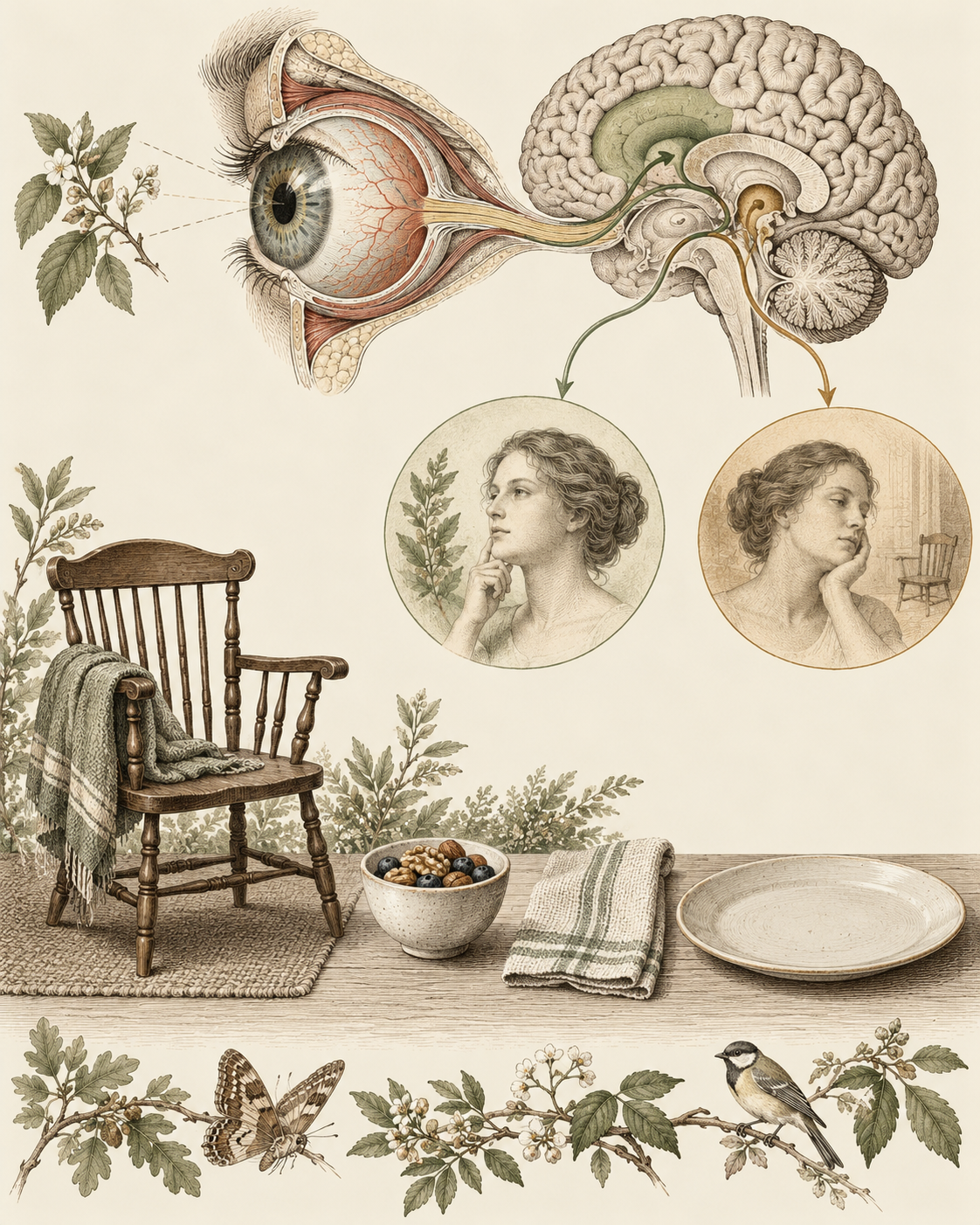
THE PANTRY CAN BECOME THE NEW PLACE WHERE THE DAY ENDS
A Habit Can Change Objects Without Changing Its Job
When one evening reward disappears, another can become more noticeable.
Ice cream.
Chips.
Takeout.
Dessert.
Endless snacks.
That does not automatically mean you replaced one problem with another.
Food is food.
Eating is normal.
Pleasure is allowed.
But if the pattern feels automatic or unsatisfying, it is worth asking:
What job is this doing tonight?

Why We Chose This For You
Loading your personalized notes…
THE MOST ANNOYING PART IS THAT THE SNACK MAY NOT FIX THE THING YOU WANTED FIXED
You eat it.
It tastes good.
Then ten minutes later you still feel:
restless,
bored,
unrewarded,
lonely,
or not quite done with the day.
That is useful information.
The food was not necessarily a mistake.
It just may not have been the entire need.
CUES CAN CREATE EXPECTATION BEFORE HUNGER IS EVEN THE MAIN DRIVER
Repeated pairings teach the brain what tends to happen next.
Television can become paired with snacks.
A certain hour can become paired with dessert.
Finishing dishes can become paired with something sweet.
The cue can create anticipation.
That does not mean you should eliminate every ritual.
It means you can distinguish:
I chose this because I want it,
from:
the sequence started and I followed it.
WHY THIS MATTERS
Physical hunger, learned cues and reward-seeking can all influence evening eating. Separating them even roughly can make your response more deliberate and better matched to the actual state.

A Note For You
Loading your personalized notes…

Recent Slip Insight
Add a Title
ONE BENEFIT TO WATCH FOR
Knowing the Kind of Hunger Helps You Choose a Response That Actually Fits
If you are physically hungry, eat.
If the pattern is ritual, you can decide whether you still want the ritual.
If you need reward, maybe the food is part of it—but perhaps you also need something that makes the evening feel like yours.
If you need stimulation, changing activities may work better than continuing to search the kitchen.
One label will not solve the night.
It can make the response less automatic.
WHY THIS MATTERS
Physical hunger, learned cues and reward-seeking can all influence evening eating. Separating them even roughly can make your response more deliberate and better matched to the actual state.

WHAT PEOPLE DON'T TELL YOU
The goal is awareness, not food purity.
CWOB is not here to turn ice cream into the villain after alcohol stops being the villain.
You are allowed to enjoy food.
You are allowed to eat for pleasure.
The question only becomes useful when the pattern feels:
compulsive,
unsatisfying,
confusing,
or out of line with what you actually want.
Then curiosity beats shame.
THE BENEFIT OF DAY 103

“Before you fight the craving for something, figure out what kind of something you are actually craving.”
Cheers Without Beers

Your Version of Today's Experiment
Loading your personalized notes…

What to Take Away
Add a Title

Today's Experiment
Name It Before You Answer It
The next time you want something after dinner, pause for one minute and guess which signal is strongest: physical hunger, reward, ritual or stimulation.


Ask the Ordinary-Food Question
Would you eat a normal meal or snack right now, or only a very specific reward food? It is not a perfect test, but it can give you information.


Check the Cue
Did the urge arrive with the couch, television, kitchen cleanup, kids going to bed or another repeated evening moment?

WHAT ARE YOU TESTING?
Can you tell the difference between body hunger and the broader evening need for reward, ritual or stimulation?


Choose on Purpose
Eat it, change the activity, add another kind of reward—or do nothing. The win is making the choice with the pattern visible.

60 Seconds

What to Watch For
Loading your personalized notes…
WANT TO GO DEEPER?
Why One Reward Can Get Louder When Another Gets Quieter
Your brain did not stop liking reward just because one source changed.
When an established reward is removed or reduced, other rewarding behaviors may become more noticeable.
That can include food.
This is not proof that something has gone wrong.
It may simply reveal how strongly the evening was organized around:
relief,
taste,
anticipation,
novelty,
or having something to look forward to.
The longer-term task is not removing reward.
It is broadening it.
Food can remain one source.
So can movement, entertainment, hobbies, connection, quiet, accomplishment, sex, games, projects, reading, being outside or doing absolutely nothing.
A durable life has more than one way to feel good.
Name the Need Before You Judge the Behavior
Not every evening want is the same.
Physical hunger, reward, ritual and stimulation can all feel like 'I want something.' Learn which one is showing up most often.


A Gentle Warning
Loading your personalized notes…
BEFORE YOU GO

What are you most often looking for after dinner: food, reward, a ritual, stimulation or a clear ending to the day?
There can be more than one answer. Look for the pattern that repeats most.

TODAY'S TAKEAWAY
Pleasure Is Not the Problem. Autopilot Is the Part Worth Seeing.
Keep the foods and rituals you actually enjoy. Get curious about the ones that leave you still searching.

Caffeine & Stimulation
Tomorrow we look at another everyday tool that can quietly solve one problem while creating another: stimulation.


bottom of page